How Long Is 1 Acre in Miles? Understanding Land Measurements for Buyers
Dec, 26 2025
Land Area Conversion Calculator
People often ask, how long is 1 acre in miles? The question seems simple, but it’s built on a misunderstanding. You can’t measure an acre in miles because an acre is a unit of area, not length. Miles measure distance - like how far you drive from one town to another. Acres measure how much ground you’re standing on - like the size of your backyard or the field next door.
What Exactly Is an Acre?
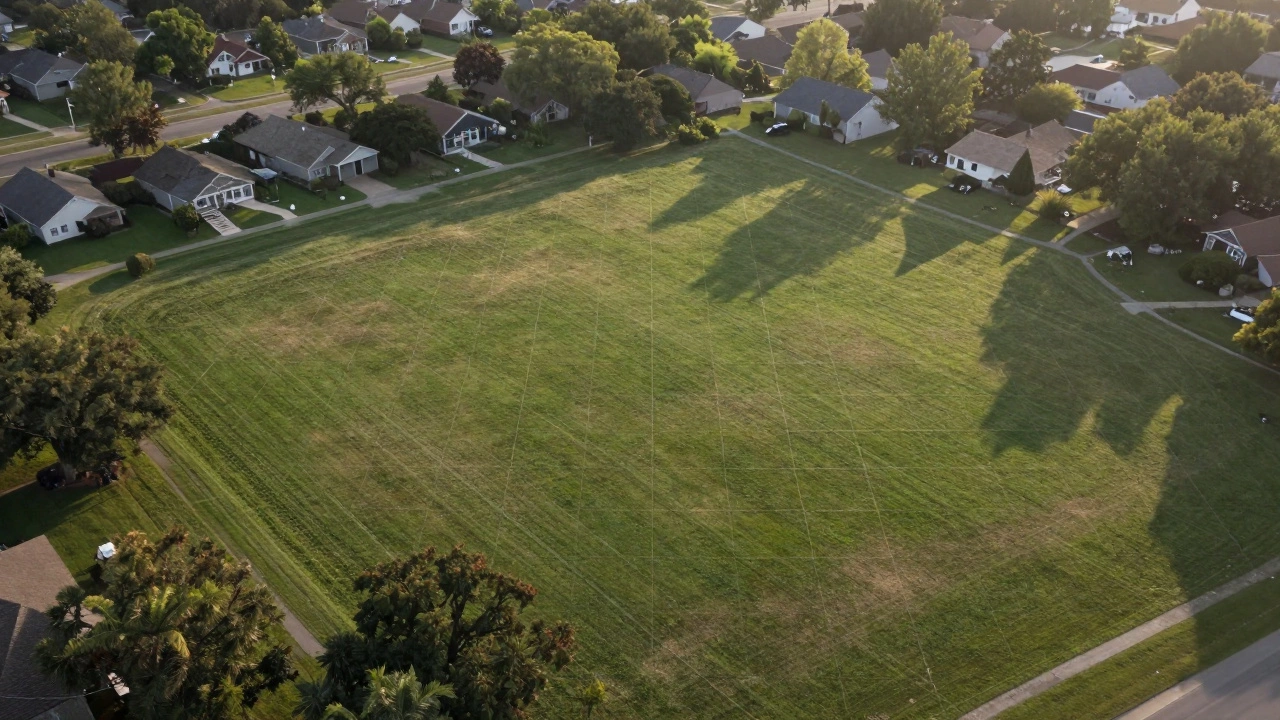
An acre is a unit of land area used mostly in the United States and the United Kingdom. One acre equals 43,560 square feet. That’s about the size of a standard American football field without the end zones. If you’ve ever walked across a football field from goal line to goal line (100 yards), you’ve walked 300 feet. An acre is slightly smaller than that rectangle - it’s roughly 208.7 feet wide by 208.7 feet long if it’s shaped like a perfect square.That’s not how most land is shaped, though. Acreage can be long and narrow, wide and flat, or oddly shaped. A 1-acre lot could be 100 feet wide and 435.6 feet long. Or it could be 50 feet wide and 871.2 feet long. The shape doesn’t matter. Only the total square footage does.
Why People Get Confused About Acre and Mile
The confusion comes from mixing up units. A mile is 5,280 feet long. So when someone says, “How long is 1 acre in miles?” they’re trying to turn a square area into a straight line. It’s like asking, “How tall is a gallon of water?” A gallon measures volume. You can’t answer that with just height - you need width and depth too.Land buyers often hear phrases like “a half-mile of road frontage” or “10 acres along the highway.” They start thinking in terms of linear distance. But when you’re buying land, what matters is how much space you actually get - not how long the boundary is. A 1-acre lot with 500 feet of road frontage might be more valuable than a 2-acre lot with only 100 feet of access, even though the second one is bigger.
Real-World Examples of Acre Sizes
Here’s what 1 acre actually looks like in everyday terms:- It’s about 75% the size of a standard American football field (without end zones).
- You could fit about 16 tennis courts on 1 acre.
- A typical suburban home with a yard and driveway takes up 0.1 to 0.2 acres. So 1 acre could hold five to ten homes, depending on lot size and local zoning.
- One acre of farmland can grow roughly 10,000 ears of corn or enough vegetables to feed 10 people for a year with careful planning.
These examples help when you’re looking at land for sale. If you’re thinking of building a house, you’ll want at least 0.25 acres for privacy and space. If you’re buying a small farm or hobby property, 1 to 5 acres is common. Larger properties - 10+ acres - are often for ranching, timber, or conservation.
How Acreage Relates to Other Land Units
To make sense of land listings, you need to know how acres connect to other units:| Unit | Equals | Use Case |
|---|---|---|
| 1 acre | 43,560 square feet | Most common for residential and small commercial lots |
| 1 square mile | 640 acres | Used for large tracts, counties, or state land |
| 1 hectare | 2.47 acres | Used internationally; common in Europe and Australia |
| 1 lot (typical suburban) | 0.1 to 0.25 acres | Standard for single-family homes in most U.S. cities |
So if someone tells you they’re selling 500 acres, that’s almost a full square mile. That’s a huge amount of land - enough for a small town or a large ranch. But if they say they’re selling 0.5 acres, that’s just half of one acre - enough for a house, a garage, and a small garden, but not much else.
Why This Matters When Buying Land
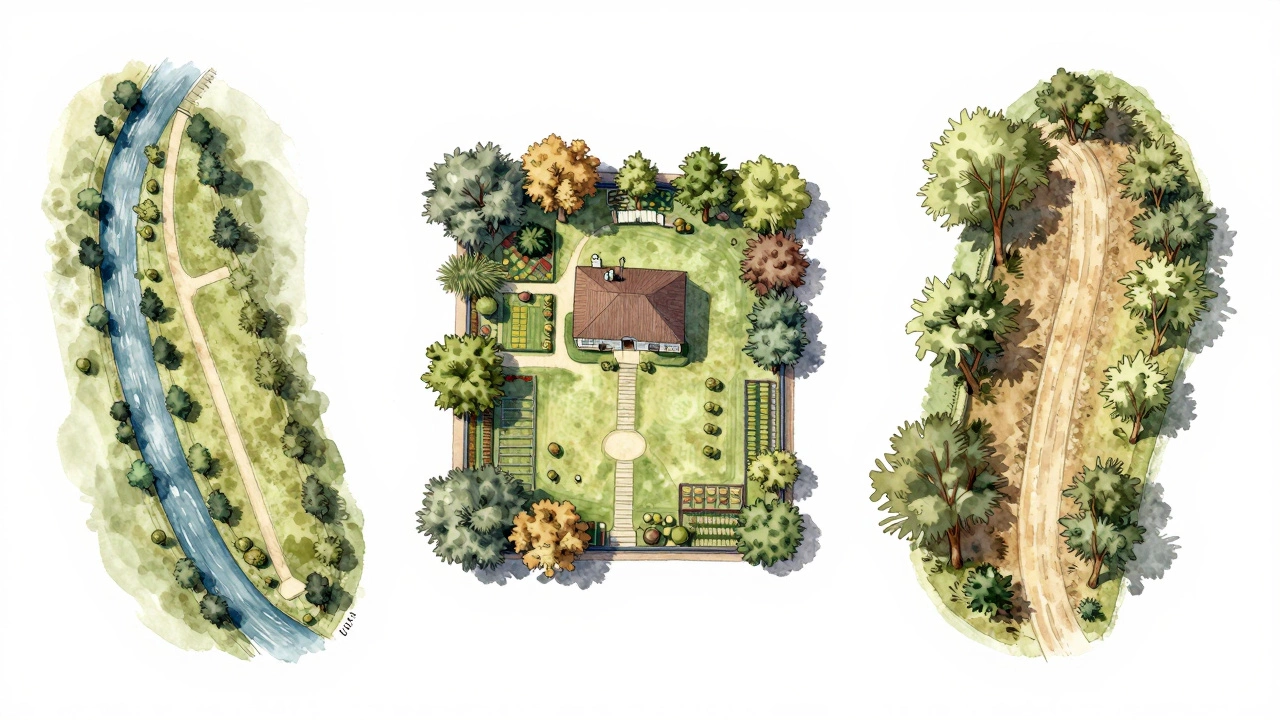
If you’re looking at land for sale, you need to know what you’re actually getting. A listing might say “1 acre with 1,000 feet of river frontage.” That sounds impressive - until you realize the lot is only 43.5 feet deep. That’s not a usable backyard. It’s a narrow strip of land clinging to the riverbank.Always ask for the full dimensions. Ask for a survey if one isn’t provided. Look at the shape. Check zoning rules - some areas require minimum lot sizes of 1 acre or more. Others allow subdivisions down to 0.1 acre. Don’t assume that “1 acre” means you can build what you want. You might be limited by setbacks, easements, or environmental restrictions.
Also, don’t trust online maps like Google Earth to measure acreage accurately. They’re great for a rough idea, but they can be off by 10% or more depending on terrain and image resolution. For legal purposes, only a professional survey counts.
Common Mistakes Buyers Make
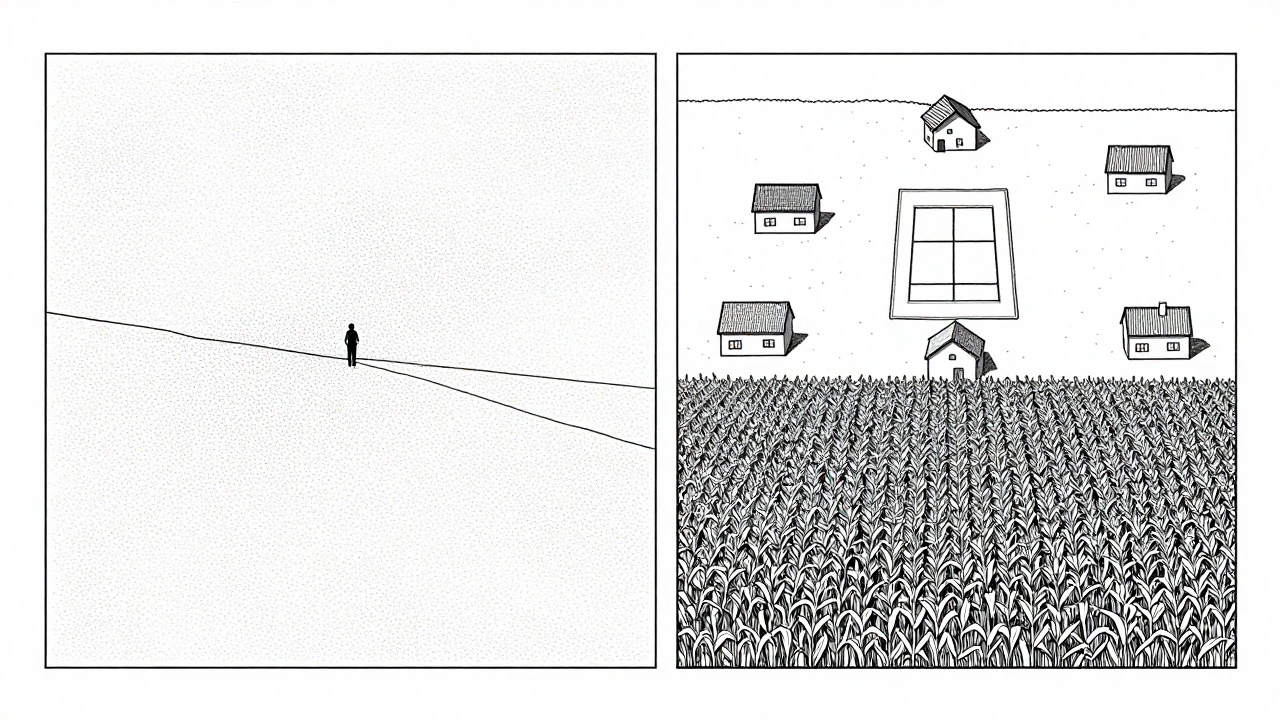
Here are the top three mistakes people make when thinking about acreage:- Assuming an acre is a square shape. It’s not. It’s a total area - any shape works.
- Confusing acreage with road frontage. A long driveway or river edge doesn’t mean more usable land.
- Thinking more acres = more value. Sometimes a 0.5-acre lot in a great neighborhood is worth more than a 5-acre lot in the middle of nowhere.
Land value isn’t about size alone. It’s about location, access, soil quality, water rights, zoning, and potential. A 1-acre plot near a city with utilities and road access can sell for 10 times more than a 10-acre plot in a remote area with no power or water.
Final Answer: You Can’t Convert Acres to Miles
So, to answer the original question: 1 acre is not measured in miles. It’s measured in square feet, square yards, or square meters. You can say 1 acre equals 0.0015625 square miles - but that’s not useful for understanding land size. What matters is that 1 acre is 43,560 square feet. That’s the number you need to remember.If you’re looking at land for sale, ignore the “miles” confusion. Focus on:
- Actual square footage
- Shape and layout
- Access and utilities
- Zoning rules
- Soil and drainage
Those are the things that will make or break your purchase. Not whether the land stretches for a mile.
Can you convert acres to miles?
No, you can’t convert acres to miles because they measure different things. Acres measure area (two-dimensional space), while miles measure distance (one-dimensional length). You can convert acres to square miles, but that’s not the same as saying how long something is.
How big is 1 acre in feet?
One acre equals 43,560 square feet. If shaped as a perfect square, it would be about 208.7 feet on each side. But most lots aren’t square - they can be long and narrow or irregular. The total area is what matters, not the shape.
Is 1 acre enough for a house?
Yes, 1 acre is more than enough for a single-family home. Most suburban lots are between 0.1 and 0.25 acres. With 1 acre, you’ll have plenty of room for a house, garage, garden, driveway, and outdoor space. It’s also common for people to build guest houses, barns, or small farms on 1-acre plots.
How many acres are in a square mile?
There are exactly 640 acres in 1 square mile. That’s a standard conversion used in rural land sales, farming, and government land records. So if you see a property listed as 128 acres, that’s one-fifth of a square mile.
Why do some land listings say “10 acres along 1 mile of road”?
That’s describing the shape of the land, not its total size. If a property has 10 acres and 1 mile of road frontage, it means the land is very long and narrow - probably only about 218 feet deep. It’s useful for businesses that need highway access, like gas stations or truck stops, but not ideal for building a home unless you want a very long driveway.
Next Steps When Buying Land
If you’re serious about buying land, here’s what to do next:- Get a copy of the legal description from the listing or county assessor’s office.
- Ask for a recent survey - don’t rely on MLS photos or Google Maps.
- Check zoning laws: What can you build? Are there minimum lot sizes?
- Verify utilities: Is there water, sewer, electricity, and internet access?
- Walk the property: Look for drainage issues, slopes, trees, and hidden easements.
Land doesn’t come with a warranty. Once you buy it, you’re responsible for everything - from soil quality to flood zones. Take your time. Don’t rush because a lot looks cheap. A $20,000 plot with no water or road access is worth far less than a $50,000 lot with full utilities and a flat, buildable surface.