What Does C1 Mean in Apartments? Simple Guide for 2BHK Buyers and Renters
Dec, 5 2025
C1 Unit Location Analyzer
Unit Location Analysis
Enter your unit details to discover what your code actually means for comfort and value.
What Your Unit Means
Key Insight: Your unit code doesn't define the apartment type - it's about location. Check the floor plan for actual layout details.
Ever looked at an apartment listing and seen C1 next to a 2BHK unit and wondered what it actually means? You’re not alone. Many buyers and renters in cities like Los Angeles, Mumbai, or Dubai run into this term and assume it’s some fancy upgrade code - but it’s usually much simpler than that.
C1 is a unit identifier, not a type
C1 doesn’t tell you the size, layout, or quality of the apartment. It’s just a label - like A2, D3, or F5. Think of it like a room number in a hotel. If a building has 20 units on each floor, the developer or property manager assigns each one a code to keep track of them. C1 means it’s Unit 1 on Floor C.
Why use letters? Buildings often use letters for floors (A, B, C, D) and numbers for units on that floor. So C1 is the first unit on the third floor (if A is ground, B is first, C is second). Some buildings start with G for ground, others use 1. It varies by project.
This system helps property managers, maintenance crews, and delivery drivers find the right place fast. It’s not marketing. It’s logistics.
Why do 2BHK listings often show C1?
When you see “2BHK C1,” it’s just shorthand for: “This is a two-bedroom, hall, kitchen apartment, and its unit code is C1.” The C1 part doesn’t change the apartment’s features - but it can tell you something about its location in the building.
For example:
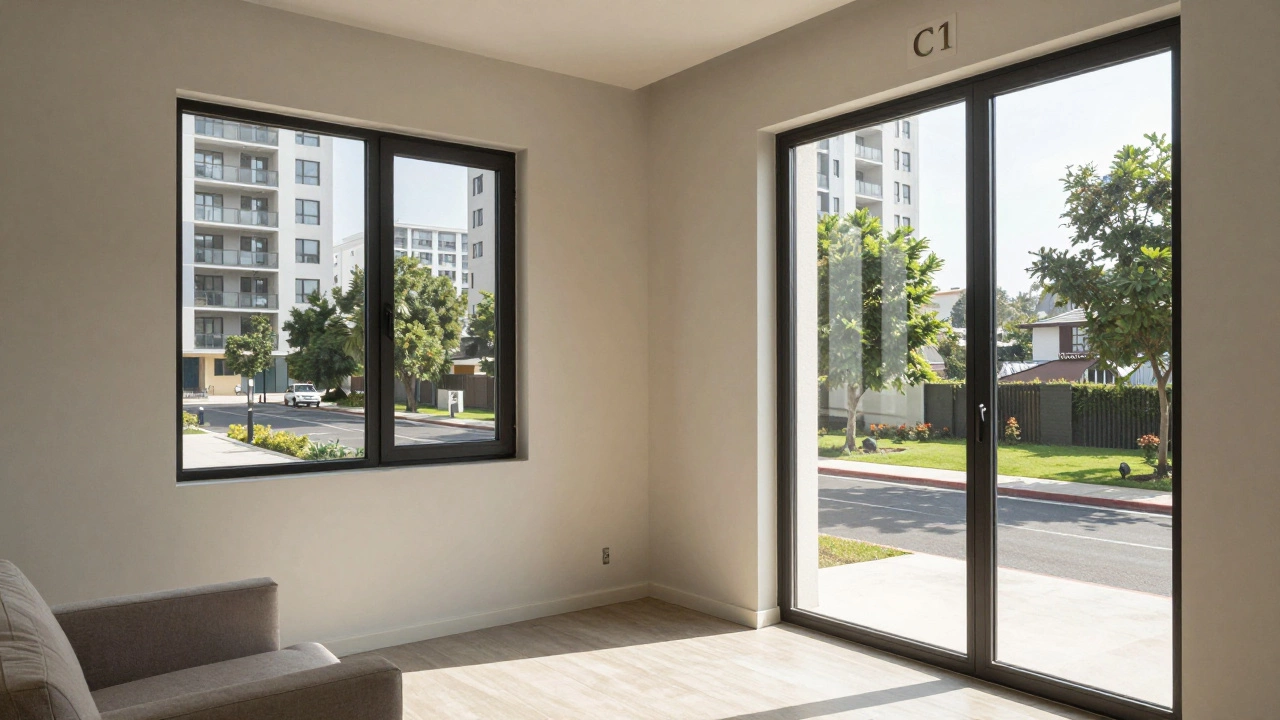
- C1 might be on the corner of the floor, giving you more windows and better airflow.
- It could be near the elevator, which is convenient but noisier.
- It might face a quiet courtyard instead of a busy street.
So while C1 itself doesn’t mean anything special, the location it represents might. That’s why smart buyers always ask: “What floor is C1 on? Which direction does it face? Is it near the stairs or garbage area?”
How to find out what C1 really means in your building
The same code can mean totally different things depending on the building. In one complex, C1 could be a premium corner unit. In another, it could be the unit right next to the boiler room.
Here’s how to get the real info:
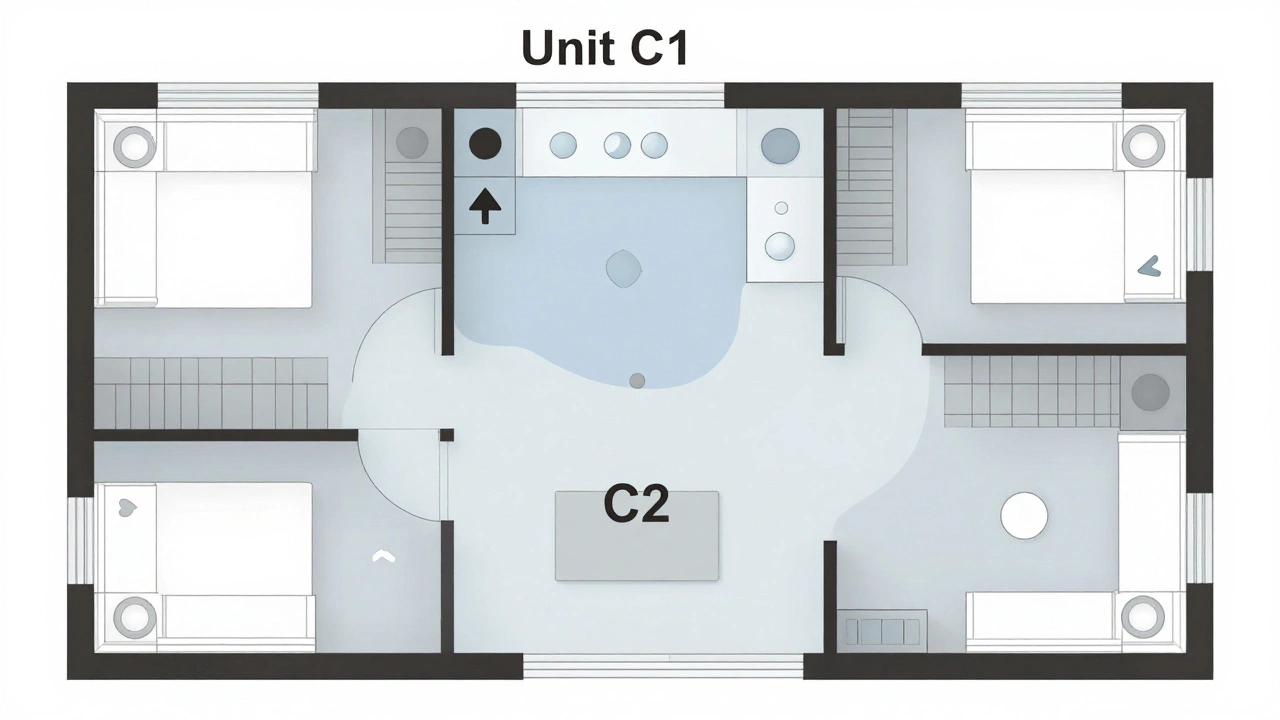
- Ask for the floor plan. Most developers or agents have a PDF or printed layout showing all units.
- Check the orientation. Is C1 facing east (morning sun) or west (hot afternoon)? That affects comfort and electricity bills.
- Look at nearby units. Is C1 next to a utility room, garbage chute, or elevator? Noise and smell matter more than you think.
- Compare it to other units. If C2 is identical but listed as “premium,” ask why. Sometimes it’s just the view.
One buyer in Mumbai paid extra for “C1” thinking it was a special layout - only to find out it was the same as B1, just closer to the elevator. He got a discount after asking for the floor plan.
What C1 is NOT
Let’s clear up some myths:
- It’s not a bedroom count. C1 doesn’t mean “one extra room.” That’s not how codes work.
- It’s not a luxury tier. You won’t find “C1 = premium” in any official housing standard. That’s just a sales tactic.
- It’s not a government classification. No city or state uses C1 to define apartment types. It’s purely internal to the builder.
- It’s not always on the third floor. If the building starts with “B” for ground floor, then C1 is second floor. If it starts with “G,” then C1 is third. Always confirm.
Some agents will say “C1 is the best unit” to push a sale. Don’t fall for it. Ask for proof - the floor plan, photos, and a walk-through.
What to look for instead of the C1 label
Instead of fixating on “C1,” focus on what actually affects your daily life:
- View: Does it overlook a park, pool, or ugly parking lot?
- Light: How many windows? Which way do they face?
- Noise: Is it next to the AC unit, garbage bin, or elevator shaft?
- Access: Is it near the main entrance or the service staircase?
- Storage: Does the unit have extra storage space or a balcony?
These factors impact your comfort far more than a letter and number. Two identical 2BHK units can feel completely different based on where they’re located - even if one is labeled C1 and the other is D4.

Real example: C1 in a Los Angeles apartment complex
In a 2023-built complex in Echo Park, Unit C1 was a 2BHK with two large windows facing a quiet side street. Unit C2, right next door, had one window facing a shared laundry room. Both were listed as “2BHK,” but C1 rented for $200 more per month - and stayed rented longer.
The difference wasn’t the label. It was the view and natural light. The agent didn’t mention that until someone asked for the floor plan.
Always ask for it. Even if you’re renting.
How to spot a misleading listing
Some listings say “C1 2BHK - Exclusive Corner Unit!” and charge more. But if you check the floor plan, C1 is just a regular unit with no extra features. That’s misleading.
Red flags:
- “C1” is highlighted as a selling point with no explanation.
- No floor plan is provided.
- The price is higher than similar units without justification.
- Agent avoids answering questions about location or orientation.
If they won’t show you the layout, walk away. A transparent seller has no problem sharing the floor plan.
Bottom line: C1 is just a location code
When you see “C1” in a 2BHK listing, don’t assume it means anything special. It’s just the unit’s ID. The real value lies in what’s behind that code - the view, the noise, the light, the access.
Always request the floor plan. Always check the orientation. Always compare it to other units. That’s how you avoid paying extra for a label that means nothing.
Whether you’re buying or renting, the best deal isn’t the one with the fanciest label. It’s the one that fits your life - and that’s never written in a code like C1.
Is C1 a type of apartment layout?
No, C1 is not a layout type. It’s just a unit identifier, like A3 or D7. A 2BHK apartment with C1 has the same layout as any other 2BHK in the building - the difference is its location, not its design.
Does C1 mean the apartment is on the third floor?
Not always. If the building uses G for ground floor, then C1 is on the third floor. But if the first floor is labeled A, then C1 is on the third level. Always check how the building labels its floors - it varies by developer.
Should I pay more for a C1 apartment?
Only if the unit itself offers something better - like a better view, more natural light, or quieter surroundings. The label “C1” alone doesn’t justify a higher price. Always compare it to other units using the floor plan.
Can C1 be a 1BHK or 3BHK unit?
Yes. C1 only tells you the unit’s location, not its size. A building might have C1 as a 1BHK, C2 as a 2BHK, and C3 as a 3BHK. The letter and number are about position, not bedroom count.
How do I find the floor plan for a C1 apartment?
Ask the agent or property manager directly. Reputable sellers always have floor plans ready. If they hesitate or say “it’s not available,” that’s a red flag. You can also check the developer’s website or visit the sales office in person.