Can a Landlord Terminate a Month-to-Month Lease Without Cause in Virginia?
Dec, 19 2025
Virginia Month-to-Month Lease Notice Period Calculator
Notice Period Calculator
Virginia law requires landlords to give at least 30 days' written notice to terminate a month-to-month lease. This calculator helps determine if your notice period meets legal requirements.
Virginia law lets landlords end a month-to-month lease without giving a reason-but only if they follow the rules exactly. No court case, no warning letter, no excuse needed. But skip one step, and you could be sued for wrongful eviction. This isn’t about being harsh. It’s about following the law.
What Counts as a Month-to-Month Lease in Virginia?
A month-to-month lease isn’t a formal contract signed for 12 months. It’s what happens when a fixed-term lease expires and the tenant keeps paying rent, and the landlord keeps accepting it. No new paper is needed. The tenancy automatically rolls over each month. That’s it.
Some landlords try to slip in a new lease agreement right before the old one ends. If the tenant doesn’t sign it and still pays rent, the law still treats it as month-to-month. You can’t force someone into a year-long contract just because you want more control.
Virginia doesn’t require written leases for month-to-month tenancies. But if there was ever a written lease, the terms from that original document still apply-until the tenancy becomes month-to-month. That includes things like late fees, pet rules, or who pays for utilities.
How Much Notice Must a Landlord Give?
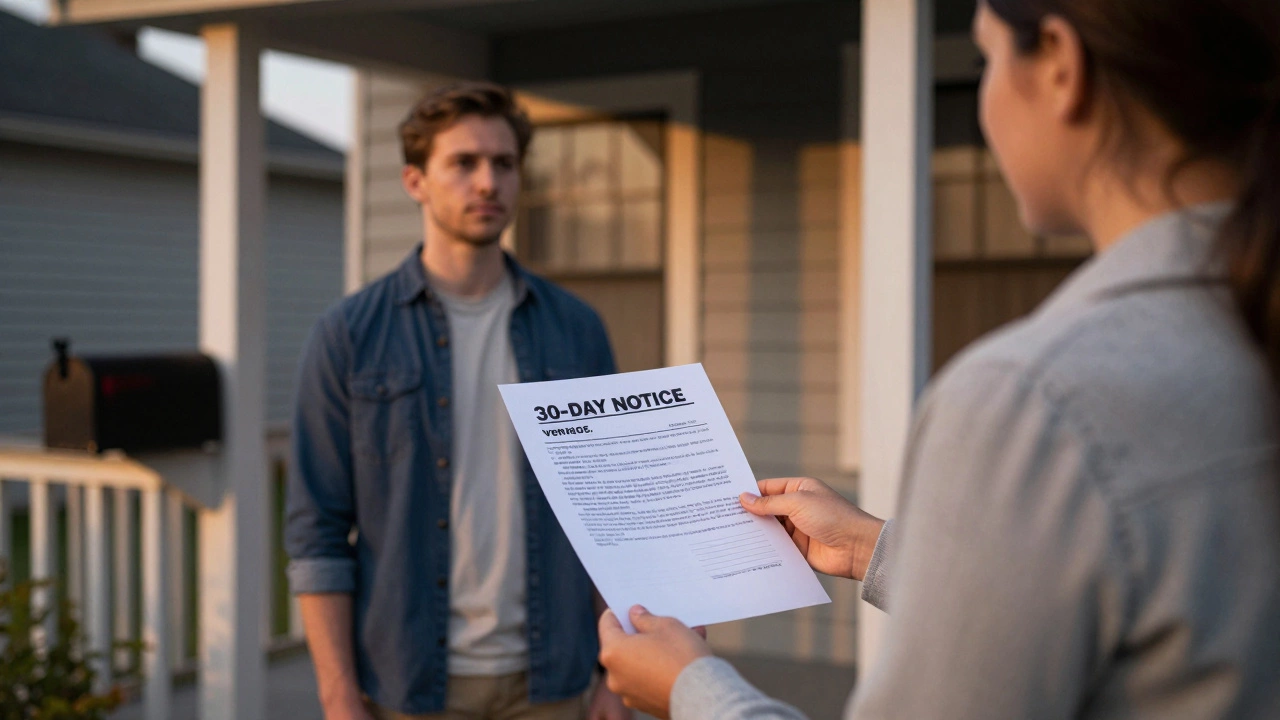
Virginia law requires at least 30 days’ written notice to end a month-to-month tenancy. That’s it. No more, no less. The notice doesn’t need to say why. You don’t have to mention noise complaints, unpaid rent, or even if the tenant is a good person.
Here’s how it works in practice: If a landlord gives notice on January 5, the tenancy ends on February 5. The tenant must move out by then. If they don’t, the landlord can file for eviction-but only after the 30-day window closes.
Notice must be in writing. An email or text message doesn’t count unless both parties agreed in writing to accept electronic notices. A hand-delivered letter, certified mail, or posting it on the door with proof of delivery are all acceptable. If you’re unsure, send it by certified mail with return receipt requested. That’s your paper trail.
Can a Landlord Give Notice for No Reason?
Yes. Virginia is a “no cause” state for month-to-month tenancies. That means a landlord can decide they want to sell the property, move in a family member, or just don’t like the tenant’s dog-and terminate the lease without explaining why.
There are no exceptions based on how long the tenant has lived there. Tenants who’ve been there five years have the same rights as those who’ve been there five months. The law doesn’t reward loyalty. It rewards following procedure.
But here’s the catch: You can’t give notice because the tenant is Black, pregnant, disabled, or filed a complaint about mold. That’s illegal discrimination under federal and state fair housing laws. If a tenant sues and proves retaliation or bias, the landlord can face fines, legal fees, and even punitive damages.

What Can’t a Landlord Do?
Landlords can’t terminate a lease in retaliation. If a tenant reports a broken heater to the city, and the landlord gives a 30-day notice the next week, that looks like punishment. Courts don’t like that. The tenant can argue the timing proves retaliation-and win.
Also, you can’t lock someone out. Not even if they’re three days late on rent. Virginia law says you must go through the court system. Changing locks, turning off utilities, or removing belongings are all illegal self-help evictions. You’ll get sued. You’ll lose money. You’ll get a court order to let them back in.
And you can’t raise rent in the middle of the notice period. If you give a 30-day notice to vacate on March 1, you can’t also send a rent increase notice on March 10. That’s seen as pressure to leave faster. It’s not illegal per se, but it’s a red flag in court.
What Should Tenants Do If They Get a Notice?
If you get a 30-day notice to vacate, don’t panic. First, check the date. Does it give you at least 30 full days? If it says “move out by January 20” and you got it on January 1, that’s only 19 days. That’s not enough. You can legally stay until February 1.
Second, look for any reason given. If the notice says “for nonpayment of rent” but you paid on time, save your receipts. You might need them. If the notice says nothing, that’s fine. Virginia doesn’t require a reason.
Third, start looking for a new place. Even if you think the notice is unfair, the law is clear. You don’t have to leave immediately, but you do have to leave by the deadline. If you don’t, the landlord can file an eviction lawsuit-and you’ll get a court date, not a warning.
Don’t assume you can negotiate. Some landlords will let you stay longer if you ask nicely. Others won’t. There’s no legal right to an extension. But asking won’t hurt. Just be polite and get any agreement in writing.
What Happens If the Tenant Doesn’t Leave?
If the tenant stays past the notice date, the landlord must file a “Summons for Eviction” in General District Court. This isn’t a quick process. It takes at least two to four weeks from filing to hearing.
The tenant gets a notice of the court date. They can show up and argue their case. Maybe they say the notice was too short. Maybe they say the landlord is retaliating. Maybe they say they paid rent but the landlord refused to accept it.
If the judge sides with the landlord, they’ll issue a “Writ of Eviction.” The sheriff then gives the tenant 72 hours to leave. If they still don’t go, the sheriff locks them out and removes their belongings. The landlord can’t do this themselves.
Here’s the kicker: If the landlord skips any step-like giving less than 30 days’ notice or trying to lock the tenant out-they lose. The court will throw out the case. The tenant stays. And the landlord may owe them money for legal fees or moving costs.

Is There a Better Way?
Some landlords wish they could just tell a tenant to leave without notice. But that’s not how the law works. The real solution? Avoid month-to-month tenancies if you want control.
Instead, sign a one-year lease. At the end of the term, you can choose not to renew. You don’t need a reason. You don’t need 30 days’ notice. You just send a letter saying you won’t renew the lease on June 30. Done.
That’s cleaner. That’s safer. That’s how most landlords in Virginia handle turnover. Month-to-month is convenient for landlords who want flexibility-but it comes with legal risks if you don’t follow the rules.
When Should You Talk to a Lawyer?
If you’re a landlord and you’re unsure if your notice is legal, get it reviewed. A 30-day notice template from the internet might miss something. Virginia law changes. Local ordinances in cities like Richmond or Alexandria can add extra rules.
If you’re a tenant and you got a notice that feels unfair-especially if you’ve been a good tenant or recently complained about repairs-consult a legal aid group. In Virginia, organizations like Legal Aid Justice Center offer free help to low-income renters.
Don’t wait until you’re facing an eviction hearing. The earlier you act, the more options you have.
Can a landlord raise rent during a month-to-month lease in Virginia?
Yes, but only with proper notice. For month-to-month tenancies, landlords must give at least 30 days’ written notice before raising the rent. There’s no state limit on how much rent can increase, but some cities like Arlington have rent control rules for certain properties. Always check local ordinances.
What if the tenant doesn’t receive the notice?
The landlord must prove the notice was delivered. Sending it by certified mail with return receipt is the best way. If the tenant claims they never got it and the landlord can’t prove delivery, the court will likely rule in the tenant’s favor. Notice isn’t valid unless it’s received.
Can a landlord terminate a lease if the tenant has a service animal?
No. Federal law protects tenants with disabilities who need service animals. Even if the lease says “no pets,” the landlord must allow the animal. Terminating the lease because of a service animal is illegal discrimination and can lead to serious penalties.
Do I need a reason to not renew a fixed-term lease in Virginia?
No. If your lease ends on June 30, you can simply send a notice before the end date saying you won’t renew. You don’t need to give a reason. This is different from terminating a month-to-month lease, which requires 30 days’ notice regardless of why.
Can a landlord evict someone for having guests over too often?
Only if the lease specifically limits guests and the tenant violated that rule. If there’s no written rule about guests, the landlord can’t use that as a reason to terminate a month-to-month lease. Even then, they’d need to give 30 days’ notice and follow proper procedure.
Final Thoughts
Virginia gives landlords the power to end month-to-month leases without cause-but that power comes with responsibility. The law is simple: 30 days’ written notice, no reason needed, no shortcuts allowed. Miss one detail, and you lose everything.
For tenants, knowing your rights is your best defense. You don’t have to leave just because a landlord says so. You have to leave when the law says so. And that’s a big difference.
Whether you’re renting or owning, the key is documentation. Write everything down. Send notices by certified mail. Keep copies. Courts don’t care about your word. They care about your paper trail.