Is a Handwritten Agreement Legal for Renting a House?

Mar, 10 2026
Many people wonder if a handwritten agreement for renting a house holds up in court. You’ve signed a piece of paper with your landlord, no fancy form, no lawyer-just your names, the rent amount, and the address. Is that enough? The short answer: yes, a handwritten agreement can be legally binding for a house rental, as long as it meets basic legal requirements.
What Makes a Handwritten Rental Agreement Legal?
A handwritten lease doesn’t need to look like a legal document to be valid. Courts don’t require fancy fonts or notary stamps. What matters is that it clearly shows three things: an offer, acceptance, and something of value exchanged (called consideration). For a rental, that means:
- The landlord offered to rent the property at a certain price
- The tenant accepted that offer
- The tenant paid rent (or promised to pay) in exchange for living there
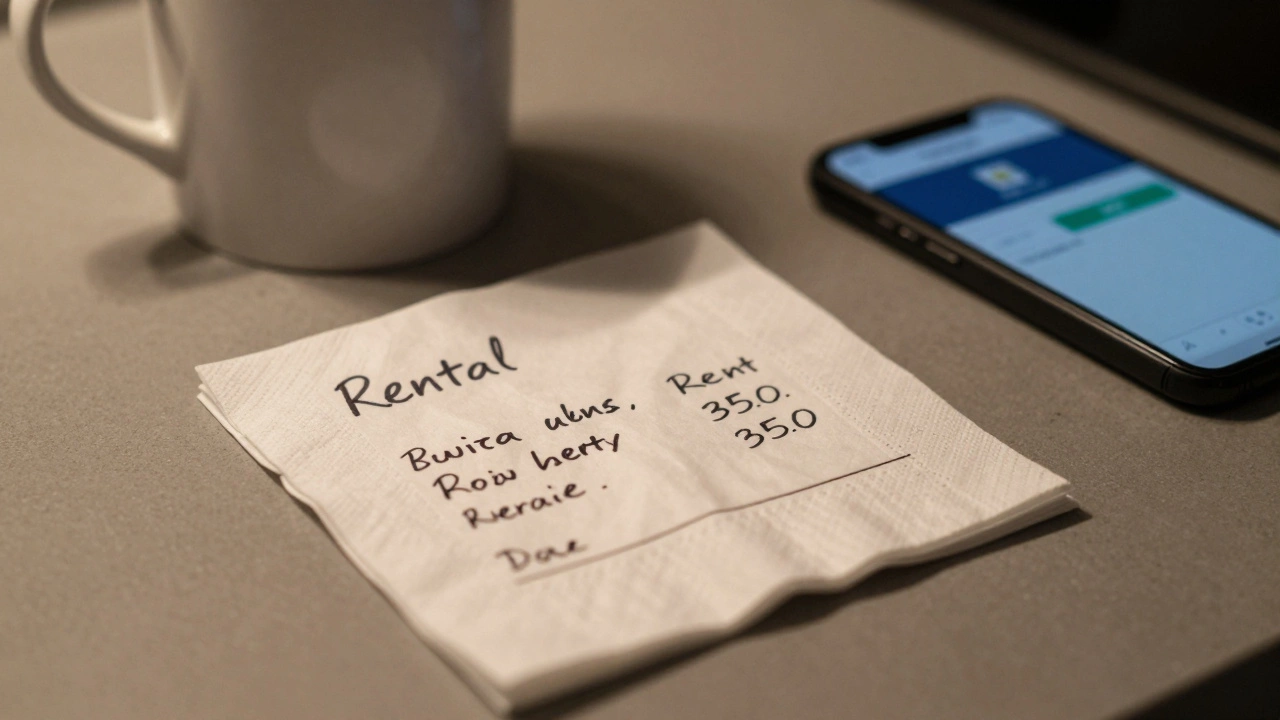
If those three elements are present-even on a napkin-it’s a contract. Many states in the U.S. recognize oral agreements and handwritten notes as legally enforceable, especially for leases under one year. For example, in California, a lease for 11 months doesn’t need to be in writing. But if it’s 12 months or longer, state law requires it to be written.
What Should a Handwritten Agreement Include?
Just because it’s legal doesn’t mean it’s smart to leave it vague. A poorly written agreement can lead to disputes. Here’s what you should write down, even if it’s just a quick note:
- Full names of landlord and tenant
- Complete property address
- Rent amount and due date
- Length of the lease (start and end date)
- Security deposit amount and return conditions
- Who pays for utilities (water, electricity, internet)
- Rules about pets, guests, or subletting
- Signatures of both parties
Even if you don’t use full sentences, writing down these details creates a paper trail. For example: “John Smith rents 123 Maple St. to Jane Doe for $1,200/month, starting May 1, 2026. Deposit: $1,200. No pets. Rent due 1st of month.” That’s enough to prove the terms if someone denies them later.
Why Written Agreements Are Still Better
Handwritten agreements work-but they’re risky. Imagine this: you pay rent on time every month. Then, your landlord suddenly says, “We never agreed to renew.” Or worse, they claim you owed $1,500 instead of $1,200. Without a clear record, you’re stuck relying on memory. And in court, memory isn’t evidence.
Most states follow the Statute of Frauds, which says certain contracts must be in writing to be enforceable. While short-term leases often don’t fall under this rule, disputes still get messy without documentation. A written agreement-typed or handwritten-gives you:
- Proof of agreed terms
- Clear boundaries for repairs and responsibilities
- Protection if the landlord tries to raise rent mid-lease
- Stronger standing if you need to file a complaint with housing authorities
Studies from the National Housing Law Project show that tenants with written leases are 40% less likely to face illegal evictions than those without. That’s not just a statistic-it’s real protection.

What If the Landlord Refuses to Sign?
Sometimes, landlords say, “I don’t need a signed paper. I trust you.” But trust doesn’t hold up in court. If your landlord won’t sign, here’s what you can do:
- Send them a text or email summarizing the terms: “Just confirming we agreed on $1,200/month rent starting May 1. Deposit of $1,200 paid. No pets. Let me know if anything’s wrong.”
- Keep records of rent payments-bank transfers, receipts, cash receipts with date and signature.
- Document repairs and communication. Save texts, emails, or even voicemails.
These aren’t substitutes for a signed agreement, but they help build a paper trail. In some cases, courts have accepted text messages and payment records as proof of a rental arrangement.
What Happens If You Dispute the Terms?
If a disagreement goes to court, the judge will look at:
- Any written note, even if it’s scribbled
- Payment history (did you pay the amount you claim?)
- Witnesses (did neighbors hear you and the landlord agree?)
- Behavior (did the landlord act like the terms were agreed on?)
For example, if you’ve paid $1,200 every month for 8 months and the landlord never objected, a court will likely assume that was the agreed amount-even if the note says $1,000. Actions speak louder than words on paper.
Handwritten vs. Printed: Which Is Stronger?
There’s no legal difference between a handwritten lease and a printed one. Both are contracts. But printed leases usually have:
- Standard clauses that cover common issues (late fees, maintenance, notice periods)
- Clear formatting that makes terms easier to prove
- More credibility in court
That doesn’t mean handwritten agreements are invalid. But if you’re going to write one, make it as detailed as possible. Use a printed template as a guide. Fill in the blanks by hand. Sign and date. Give a copy to both parties.
When a Handwritten Agreement Won’t Work
There are limits. A handwritten lease won’t protect you if:
- The lease is for more than one year (in most states)
- The property is owned by a corporation or government agency (they often require formal contracts)
- You’re renting a commercial space (like a storefront)
- The agreement includes illegal terms (like waiving your right to habitable conditions)
In those cases, courts will likely throw out the agreement. Always check your state’s landlord-tenant laws. For example, in New York, any lease over one year must be in writing. In Texas, even short-term leases benefit from written documentation to avoid disputes.
What to Do If You Already Signed a Handwritten Agreement
If you’re already in a rental with just a handwritten note, don’t panic. You’re not unprotected. Here’s what to do now:
- Make a clean copy of the agreement. Write it out neatly, include all details, and ask your landlord to sign it.
- Start keeping records: rent receipts, repair requests, communication logs.
- Know your rights. Most states guarantee habitable housing, even without a written lease.
- If your landlord tries to evict you without cause, contact your local housing authority-they can help even if you have no formal lease.
Many tenants think they’re powerless without a printed lease. That’s not true. You still have rights. You just need to prove them.
Final Thoughts: Is It Worth It?
A handwritten agreement for renting a house? Yes, it’s legal. But it’s also fragile. It’s like driving without a seatbelt-you might be fine, but you’re taking a big risk. The cost of a printed lease is minimal. The cost of a dispute? Could be your security deposit, your peace of mind, or even your home.
If you’re renting, get something in writing. Even if it’s just a simple note signed by both sides. It’s not about distrust. It’s about clarity. And clarity protects everyone.
Can I use a handwritten agreement for a year-long lease?
In most U.S. states, a lease for more than one year must be in writing to be enforceable. This is part of the Statute of Frauds. A handwritten agreement for a 12-month lease may be ignored in court if challenged. Always use a written contract for leases longer than one year.
Does the agreement need to be notarized?
No, notarization is not required for a rental agreement to be legal. A simple signature from both parties is enough. Notarization adds extra proof of identity but doesn’t make the contract more enforceable under most state laws.
What if the landlord doesn’t give me a copy?
You have the right to a copy of any signed agreement. If the landlord refuses, send a written request via email or certified mail. If they still don’t comply, contact your local tenant advocacy group or housing authority. In many states, failing to provide a copy can be used as evidence of bad faith.
Can I break a handwritten lease?
Yes, but you may owe penalties. A handwritten lease is still a contract. If you leave early, the landlord can sue for unpaid rent-unless they re-rent the property. Most states require landlords to make a reasonable effort to find a new tenant. Your responsibility ends once they do.
Is a verbal agreement without any writing legal?
Yes, in many cases. Oral agreements for leases under one year are legally binding. But they’re hard to prove. If you rely on a verbal agreement, keep records of payments, texts, or emails that confirm the terms. Courts will look at your behavior and payment history to decide if the agreement existed.