What Is an F1 Apartment? A Simple Guide to This Common Housing Type
Dec, 2 2025
Ever seen an apartment listed as an F1 and wondered what it actually means? You’re not alone. In many parts of the world-especially in Europe, India, and parts of Asia-an F1 apartment is one of the most common housing options you’ll come across. But if you’re used to terms like studio, 1BHK, or one-bedroom, this label can be confusing. So what exactly is an F1 apartment? And how does it compare to the 2BHK units you might be shopping for?
What Does F1 Stand For?
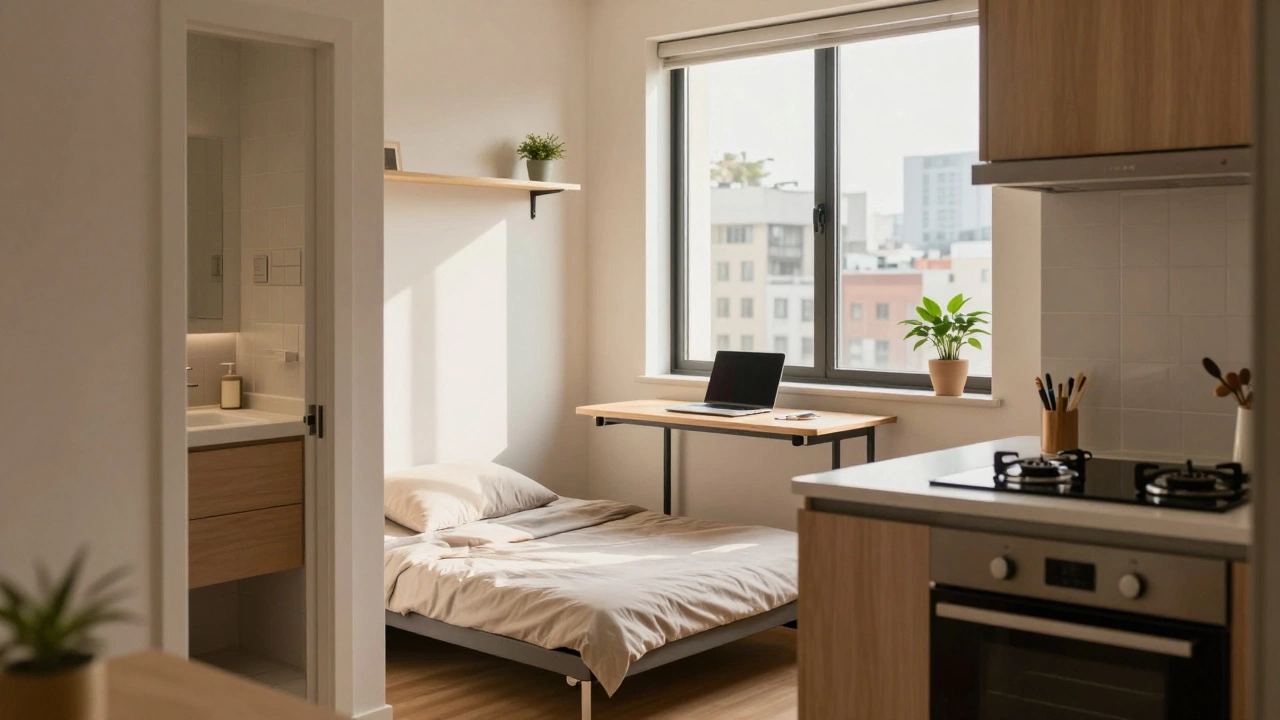
F1 is shorthand for Flat 1 or One Room Flat. It’s not a brand name or a fancy architectural term-it’s a simple, practical way to describe the layout of a unit. The "F" stands for "Flat," and the "1" means it has one main room. That one room is typically designed to serve as the living room, bedroom, and sometimes even the dining area-all in one open space.
Think of it like a studio apartment in the U.S. or a 1BHK in India. But here’s the catch: an F1 doesn’t always include a separate kitchen or bathroom. In older buildings or lower-cost housing, the kitchen might be a small alcove or even just a counter with a sink and hotplate. The bathroom is usually a separate enclosed space, but not always. Some F1 units have a shared bathroom down the hall, especially in older tenement-style buildings.
What’s Inside an F1 Apartment?
An F1 apartment is compact by design. It’s meant for one person or a couple who don’t need much space. Here’s what you’ll typically find:
- One main room - This is the heart of the apartment. It’s where you sleep, sit, eat, and work. Furniture is often multi-functional: a sofa that turns into a bed, foldable tables, wall-mounted desks.
- Separate bathroom - Most modern F1 units include a private bathroom with a shower, toilet, and sink. Older ones may not.
- Small kitchen area - Could be a built-in counter with a two-burner stove, microwave, and mini-fridge. Some have a full-size kitchen, but it’s rare in the smallest F1s.
- No separate bedroom - This is the key difference from a 2BHK. There’s no door closing off a bedroom. You sleep in the same room you live in.
Size-wise, an F1 usually ranges from 250 to 450 square feet. That’s about the size of a large walk-in closet in a typical American home. It’s not much, but it’s enough if you’re single, a student, or someone who spends most of their time outside the apartment.
F1 vs. 2BHK: What’s the Real Difference?
If you’re comparing F1 apartments to 2BHK units, you’re looking at two very different lifestyles.
A 2BHK-two bedrooms, one hall, one kitchen-is designed for families or roommates. It has two enclosed bedrooms, a separate living room, a full kitchen, and usually two bathrooms. The total area is often between 700 and 1,200 square feet. It’s more expensive, more space-heavy, and built for long-term living with others.
An F1 is the opposite. It’s minimalist. It’s efficient. It’s meant for people who value location and affordability over square footage. You won’t host large dinner parties in an F1. You won’t have a guest room for your in-laws. But you’ll pay 40% to 60% less in rent or purchase price, and you’ll likely be closer to transit, shops, and work.
Here’s a quick comparison:
| Feature | F1 Apartment | 2BHK Apartment |
|---|---|---|
| Number of rooms | 1 main room | 2 bedrooms + living room |
| Typical size | 250-450 sq ft | 700-1,200 sq ft |
| Separate bedroom? | No | Yes |
| Separate kitchen? | Usually small or partial | Full-sized, enclosed |
| Best for | Singles, students, remote workers | Couples, families, roommates |
| Monthly rent (avg. global) | $400-$800 | $900-$2,000 |
Who Buys or Rents an F1 Apartment?
F1 apartments aren’t for everyone. But they’re perfect for specific people:
- Young professionals starting out in a big city. They want to live near their job, not spend half their paycheck on rent.
- Students who need a place to sleep and study, not a social hub.
- Travelers or digital nomads staying in a city for a few months. They don’t need a lot of space-just a clean, safe place to rest.
- Retirees downsizing from a larger home. They want low maintenance and easy access to services.
- Investors buying in high-demand urban areas. F1 units have high rental turnover and are easier to rent out than larger units.
It’s not a lifestyle for people who love entertaining, collecting furniture, or needing quiet space for multiple activities. If you need a home office, a guest room, or a place to store holiday decorations, an F1 will feel cramped.
Where Are F1 Apartments Common?
You’ll find F1 apartments everywhere-just under different names. In France, they’re called "studio" or "T1." In Germany, they’re "Einraumwohnung." In India, they’re labeled as 1BHK. In the U.S., they’re studios or efficiency apartments.
They’re especially common in:
- European cities like Paris, Berlin, and Madrid, where space is tight and housing demand is high.
- Asian metropolises like Mumbai, Singapore, and Tokyo, where land is expensive and population density is extreme.
- University towns worldwide, where student housing needs to be affordable and plentiful.
In the U.S., you’ll see them in cities like New York, San Francisco, and Boston. They’re less common in suburbs or rural areas because demand is lower and land is cheaper.

Pros and Cons of Living in an F1
Before you sign a lease or make an offer, weigh the trade-offs.
Pros:
- Affordable - Lower rent, lower utilities, lower property taxes.
- Easy to maintain - Cleaning, organizing, and fixing things is faster and simpler.
- Prime locations - Often found in walkable neighborhoods with cafes, transit, and shops nearby.
- Lower commitment - Great if you’re unsure how long you’ll stay in a city.
- Good ROI for investors - High demand from renters means faster turnover and steady income.
Cons:
- No privacy - Everything happens in one room. No place to hide from noise or distractions.
- Limited storage - You’ll need to be ruthless about what you own. Clutter becomes a problem fast.
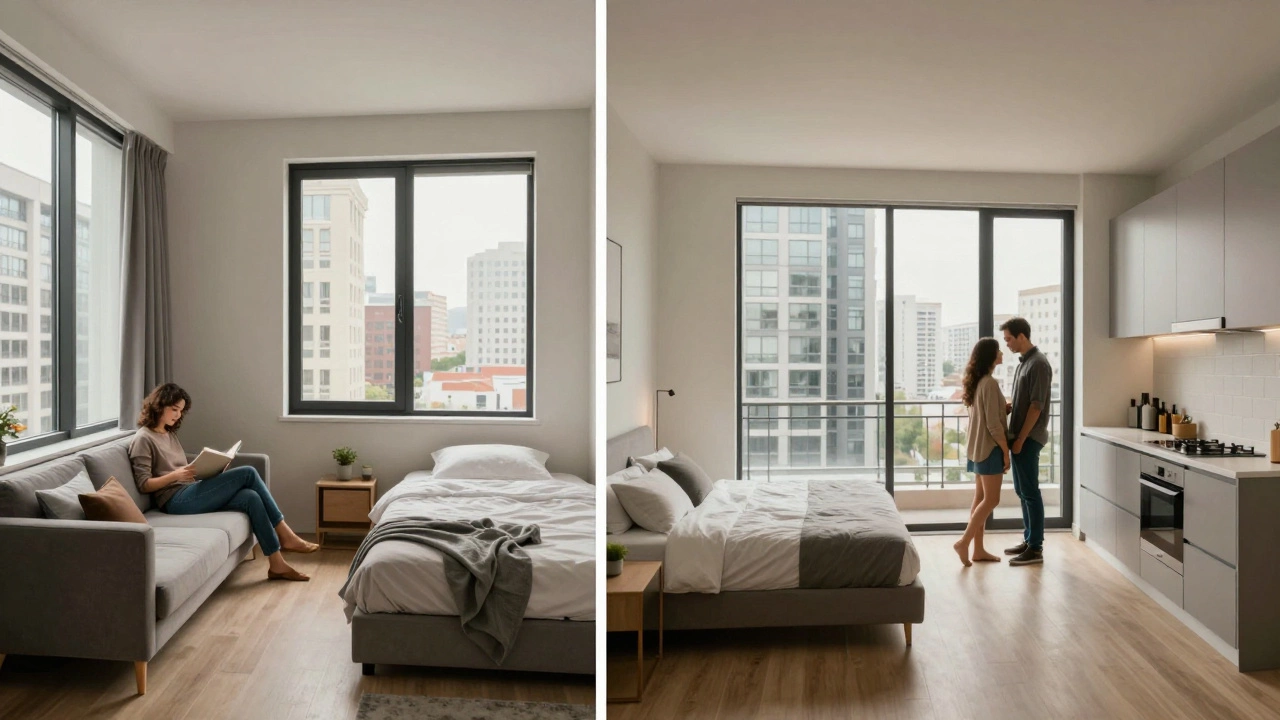
- Not ideal for couples - Sharing one room 24/7 can strain relationships over time.
- Hard to resell - Some buyers avoid F1s because they’re too small for families.
- Utilities can be higher per square foot - Heating or cooling a small space efficiently can be tricky in extreme weather.
Is an F1 Apartment Right for You?
Ask yourself these questions:
- Do I spend more than 8 hours a day outside my home?
- Can I live with minimal belongings?
- Do I need a separate space to work or sleep?
- Am I okay with a smaller kitchen and no guest room?
- Is location more important than space?
If you answered yes to most of these, an F1 apartment could be a smart, cost-effective choice. If you answered no, look at a 1BHK or studio with a separate bedroom instead.
F1 apartments aren’t glamorous. They’re not designed for Instagram photos or big family gatherings. But they’re real. They’re practical. And for millions of people around the world, they’re the only way to live in a city without going into debt.
Is an F1 apartment the same as a studio?
Yes, an F1 apartment is essentially the same as a studio apartment. Both have one main room that combines living, sleeping, and sometimes dining areas. The term "F1" is used mostly in Europe and Asia, while "studio" is more common in North America. The layout and size are very similar.
Can two people live comfortably in an F1 apartment?
It’s possible, but not ideal. Two people can share an F1 if they’re very organized, have similar routines, and don’t mind close quarters. Couples often do it temporarily-like students or new arrivals. But long-term, the lack of privacy and storage can cause stress. It’s better suited for singles or people who spend most of their time outside the apartment.
Do F1 apartments have kitchens?
Most modern F1 apartments include a kitchen area, but it’s usually small-just a counter with a sink, a two-burner stove, and a mini-fridge. In older buildings, the kitchen might be just a hotplate and a sink in the main room. Full kitchens with cabinets and a dishwasher are rare in true F1 units.
Are F1 apartments a good investment?
In high-demand urban areas, yes. F1 apartments have high rental demand from students, young professionals, and travelers. They’re cheaper to buy, easier to rent out, and turn over faster than larger units. However, they’re harder to sell later because many buyers want more space. They’re best for short- to medium-term investors or those focused on cash flow, not long-term appreciation.
Why do some listings say "F1" and others say "1BHK"?
It’s just regional terminology. "F1" is common in Europe and parts of Asia, while "1BHK" (Bedroom, Hall, Kitchen) is used in India and neighboring countries. Both refer to the same thing: a single-room unit with a kitchen and bathroom. The "BHK" system adds "hall" (living area) to emphasize that the main room serves multiple purposes.
Next Steps: What to Look for When Viewing an F1
If you’re considering an F1 apartment, here’s what to check during a tour:
- Light and ventilation - Is there a window? Does air circulate? Small spaces get stuffy fast.
- Storage - Are there closets, under-bed storage, or wall shelves? You’ll need every inch.
- Noise levels - Are the walls thin? Do you hear neighbors? In a one-room unit, sound travels easily.
- Building amenities - Is there laundry? A shared courtyard? Security? These matter more when your apartment is small.
- Utility costs - Ask how much electricity and heating typically cost. Older buildings can be inefficient.
An F1 apartment won’t change your life. But if you choose wisely, it can give you the freedom to live where you want-without the burden of a huge rent bill.