Why Is Rent So High in Texas? The Real Reasons Behind the Surge
Jan, 2 2026
Texas Rent Affordability Calculator
Over the last five years, rent in Texas has jumped more than 40% in cities like Austin, Dallas, and Houston. In 2020, the average one-bedroom apartment in Austin cost $1,200 a month. Today, it’s $2,100. That’s not inflation-it’s a system breaking under pressure. People are moving to Texas for jobs, lower taxes, and the myth of affordability. But the housing supply hasn’t kept up. And now, renters are paying the price.
People Are Moving In Faster Than Homes Are Being Built
Texas added over 1.2 million new residents between 2020 and 2024. That’s more than the entire population of Oklahoma. Most came from California, New York, and Illinois, chasing lower income taxes and remote work flexibility. But here’s the catch: Texas didn’t build enough homes to match that growth. In 2023, the state added about 130,000 new housing units. It needed 220,000 just to keep pace with population growth. That gap? It’s what’s driving rent up.
When demand outstrips supply, prices rise. That’s basic economics. But in Texas, local governments made it harder to build. Many cities still enforce single-family zoning rules that block duplexes, triplexes, and small apartment buildings. In Austin, you can build a single house on a 5,000-square-foot lot-but not four smaller units. That keeps density low and forces developers to build expensive, large homes that only wealthy buyers can afford. Renters get left out.
Land Costs and Construction Are Skyrocketing
Even when developers want to build, they hit walls. Land prices in Dallas-Fort Worth have doubled since 2020. In Houston, the cost to build a new apartment unit jumped from $160,000 in 2020 to $275,000 in 2025. Why? Labor shortages, higher material costs, and stricter building codes. Steel, lumber, and copper prices haven’t dropped back to pre-pandemic levels. And with interest rates still above 6%, banks aren’t lending as freely for rental projects.
Builders are forced to focus on luxury units-those with gyms, rooftop pools, and smart home tech-because those are the only ones that can turn a profit. Middle-income renters? They’re stuck with older apartments that are aging, poorly maintained, and still charging $1,800 a month. There’s no middle ground anymore.
Investors Are Buying Up Homes-And Turning Them Into Rentals
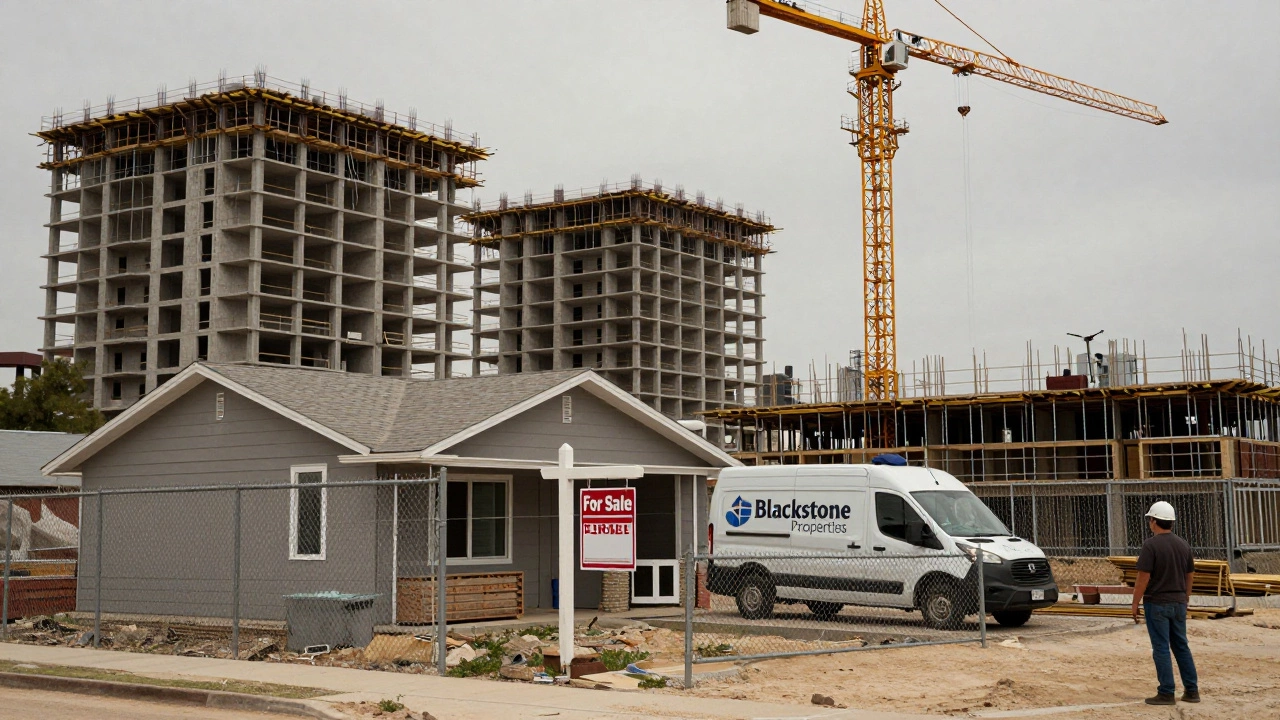
Since 2021, institutional investors like Blackstone, Vanguard, and private equity firms have bought over 120,000 single-family homes in Texas. That’s not just a few houses. That’s entire neighborhoods. These companies don’t care if a home is in good condition. They care about cash flow. They buy cheap, fix it up minimally, and rent it out at market rates.
In San Antonio, one investor bought 800 homes in a single year. In Fort Worth, nearly 15% of all single-family homes are now owned by corporations. These investors don’t live there. They don’t care about the community. They just want returns. And because they buy in bulk, they outbid regular families who want to own a home. That pushes more people into rentals-and drives prices even higher.
Wages Haven’t Kept Up
Texas has low unemployment. But it also has low wages. The median hourly wage in Texas is $18.40. That’s below the national average. To afford a one-bedroom apartment at $2,000 a month, you need to earn at least $38,000 a year-before taxes. That’s nearly double the median income in many Texas cities.
Even jobs that used to pay enough-like nursing assistants, warehouse workers, or teachers-are now struggling. A teacher in Arlington makes $52,000 a year. After taxes, that’s about $4,000 a month. Rent for a two-bedroom apartment? $2,400. Utilities, groceries, insurance? Another $1,200. That leaves $400 for transportation, phone bills, and emergencies. No savings. No cushion. One flat tire and you’re behind.

There’s No Real Rent Control-And No Safety Net
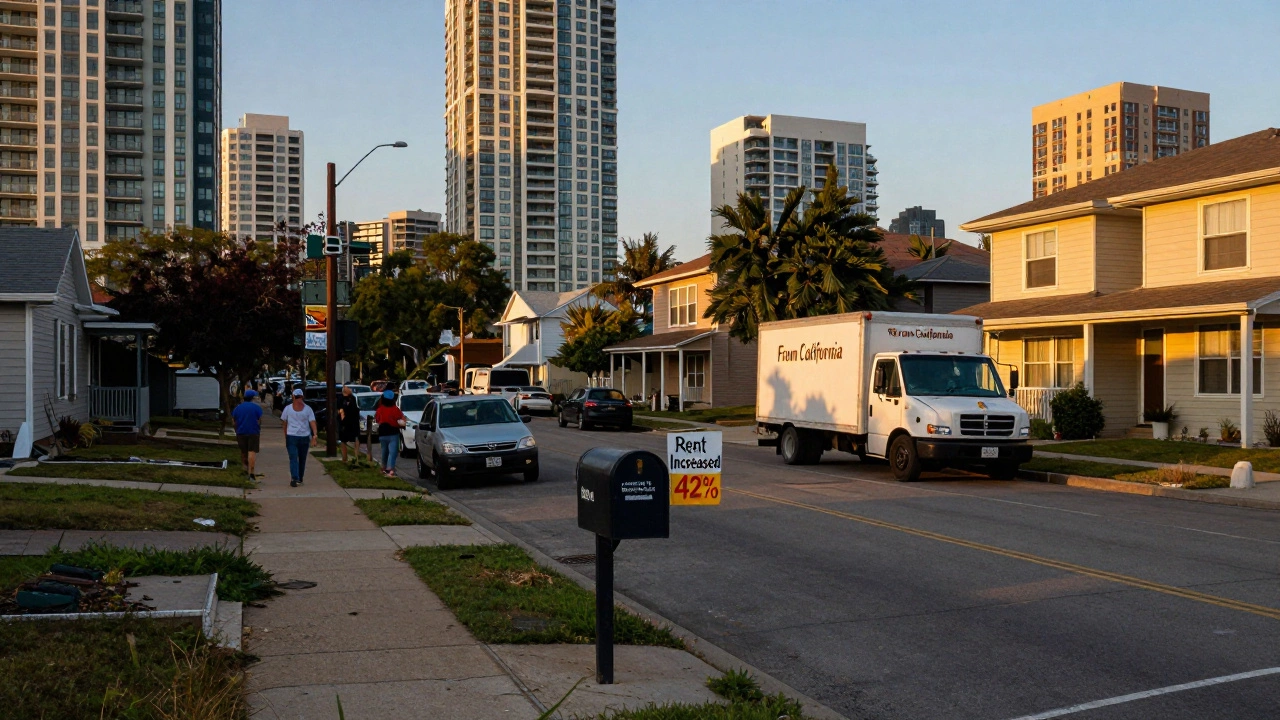
Texas law bans cities from enacting rent control. That means landlords can raise rent by 20%, 30%, even 50% in a single year. In Houston, a tenant got a 42% rent hike after their lease expired. They couldn’t afford it. They had to move. But every other unit in the area was priced the same-or higher.
There’s almost no public housing left. Texas spends less than $1 per capita on affordable housing programs. In contrast, New York spends $38. The state’s Section 8 waiting list? Over 100,000 names long. The average wait time? Seven years.
Without limits on rent increases or enough subsidized housing, renters have zero power. They’re at the mercy of landlords and investors who don’t answer to them.
What’s the Fix? It’s Not Simple
There’s no magic solution. But some cities are trying. Austin passed a policy in 2023 that allows fourplexes in neighborhoods that used to allow only single-family homes. Dallas relaxed parking requirements for new apartments. Those changes are small, but they matter. More density means more units. More units mean lower prices over time.
States like California and Oregon passed laws to let homeowners build backyard cottages. Texas could do the same. Allowing ADUs (accessory dwelling units) would unlock thousands of hidden rental units. Right now, thousands of backyards sit empty, waiting for someone to build a small apartment above the garage or in the backyard. But local rules block it.
And if investors are buying up homes, maybe the state should tax them differently. California taxes corporate landlords at a higher rate than owner-occupants. Texas doesn’t. That’s a missed opportunity to slow the corporate takeover of housing.
Until Texas starts building more homes for everyday people-not just for investors or luxury buyers-rent will keep climbing. And more families will be forced out of the cities they helped grow.
Why are rents in Texas higher than in other states with similar populations?
Texas isn’t higher just because of population-it’s because of zoning. Many Texas cities still ban multi-unit buildings in 90% of residential areas. That forces all growth into expensive single-family homes. Meanwhile, states like Minnesota and Colorado allow duplexes and triplexes in most neighborhoods, which creates more supply. More supply = lower prices.
Is it cheaper to buy a home than rent in Texas?
Not anymore. In 2020, buying was cheaper in most Texas cities. Now, mortgage payments on a median-priced home ($380,000) are $2,300 a month at 6.5% interest. That’s more than rent for a comparable apartment. And you still need $76,000 down. For most renters, buying isn’t an option-it’s a fantasy.
Do low taxes in Texas make up for high rent?
No. Texas has no state income tax, but it makes up for it with high property taxes and sales taxes. A family earning $50,000 pays about $4,200 a year in property and sales taxes combined. That’s 8.4% of their income. In California, they’d pay $6,500 in income tax-but $1,800 less in property and sales taxes. The trade-off isn’t as simple as it sounds.
Are there any Texas cities where rent is still affordable?
Yes-but they’re shrinking. Places like Laredo, Brownsville, and Tyler still have rents under $1,400 for a one-bedroom. But even there, prices are rising fast. As people flee Austin and Dallas, they’re pushing demand into these smaller cities. Within two years, those towns may no longer be affordable either.
What can renters do right now to save money?
Move to a less popular neighborhood. A two-bedroom in East Austin costs $2,500. Same unit in North Austin? $1,900. Or live farther out-20 minutes from downtown-and commute. Or find a roommate. Sharing a three-bedroom can cut rent by 40%. Also, don’t sign a one-year lease if you can avoid it. Month-to-month leases give you more power to walk away when rent jumps.