What Is Another Name for Rent-to-Own? Common Terms for Lease-to-Own Home Agreements
Jan, 6 2026
Rent-to-Own Terms Comparison Tool
Compare key differences between common rent-to-own agreement types. Select terms to see legal protections, risks, and financial implications.
Comparison Results
| Feature | Lease-to-Own | Land Contract | Option to Purchase |
|---|---|---|---|
| Legal Basis | Landlord-Tenant Law | Real Estate Sales Law | Contract Law |
| Title Holder | Seller | Seller (until paid) | Seller |
| Down Payment Required | Option fee (non-refundable) | Payments toward full price | Separate option fee |
| Refundable Fees | Usually not | No | Only if you buy |
| Risk Level | Low-Medium | High | Medium |
| Best For | First-time buyers needing credit repair | Seller wanting quick sale | Buyers with stable income |
Important: Always get a title search and consult a real estate attorney before signing any agreement. Land contracts carry the highest risk of losing all payments if you miss payments.
If you’ve heard the term rent-to-own and wondered what else people call it, you’re not alone. Many folks searching for a path to homeownership without a big down payment stumble across this idea, only to find it under different names. The truth is, rent-to-own isn’t just one label-it’s a strategy with several interchangeable terms used across the U.S., especially in states like California, Texas, and Florida where housing costs are high and credit access is tight.
Lease-to-Own Is the Most Common Alternative
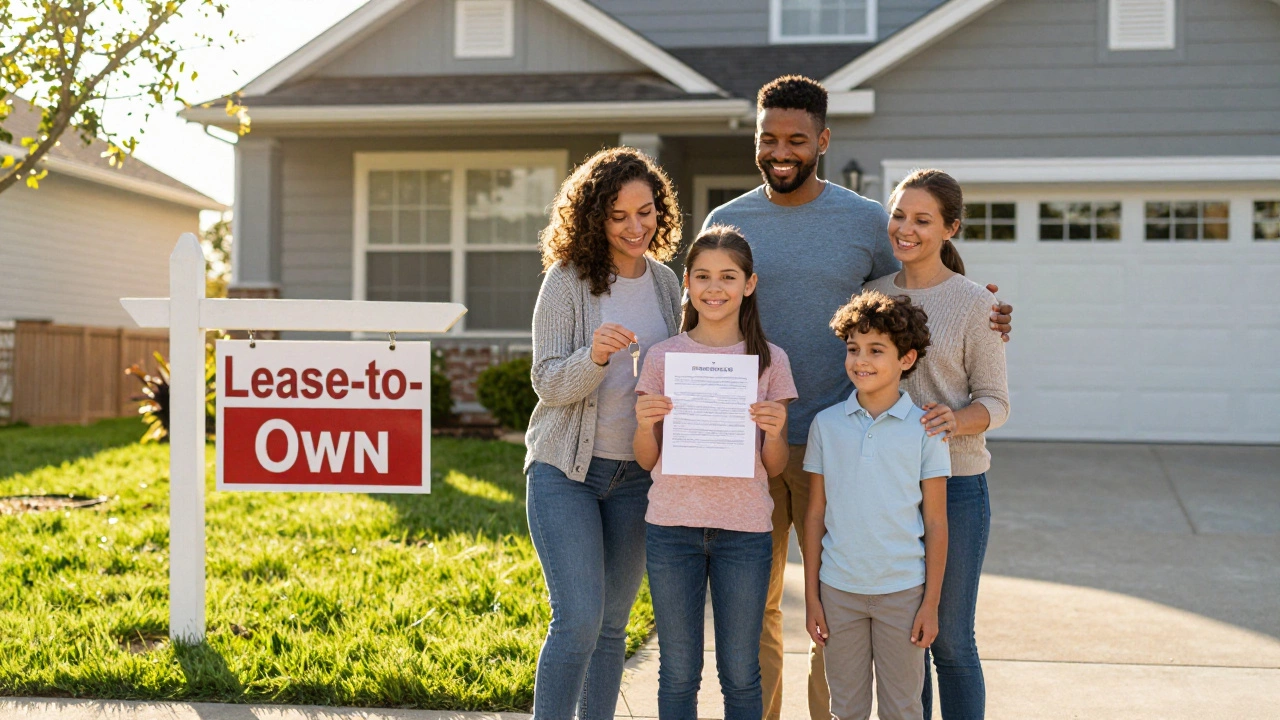
The most widely used synonym for rent-to-own is lease-to-own. You’ll see this term in listings on Zillow, Realtor.com, and local classifieds. It means the same thing: you sign a lease agreement to live in a home, and part of your monthly rent goes toward a future down payment. At the end of the lease term-usually 1 to 3 years-you have the option, but not the obligation, to buy the house at a price agreed upon upfront.
Why do sellers use "lease-to-own" instead of "rent-to-own"? It sounds more formal, and it puts the focus on the lease agreement, which is legally binding. Many real estate attorneys prefer this wording because it clarifies that the buyer is renting first, not buying immediately. In California, for example, lease-to-own contracts must include specific disclosures about the purchase price, rent credits, and what happens if you can’t buy at the end.
Option to Purchase: The Legal Backbone
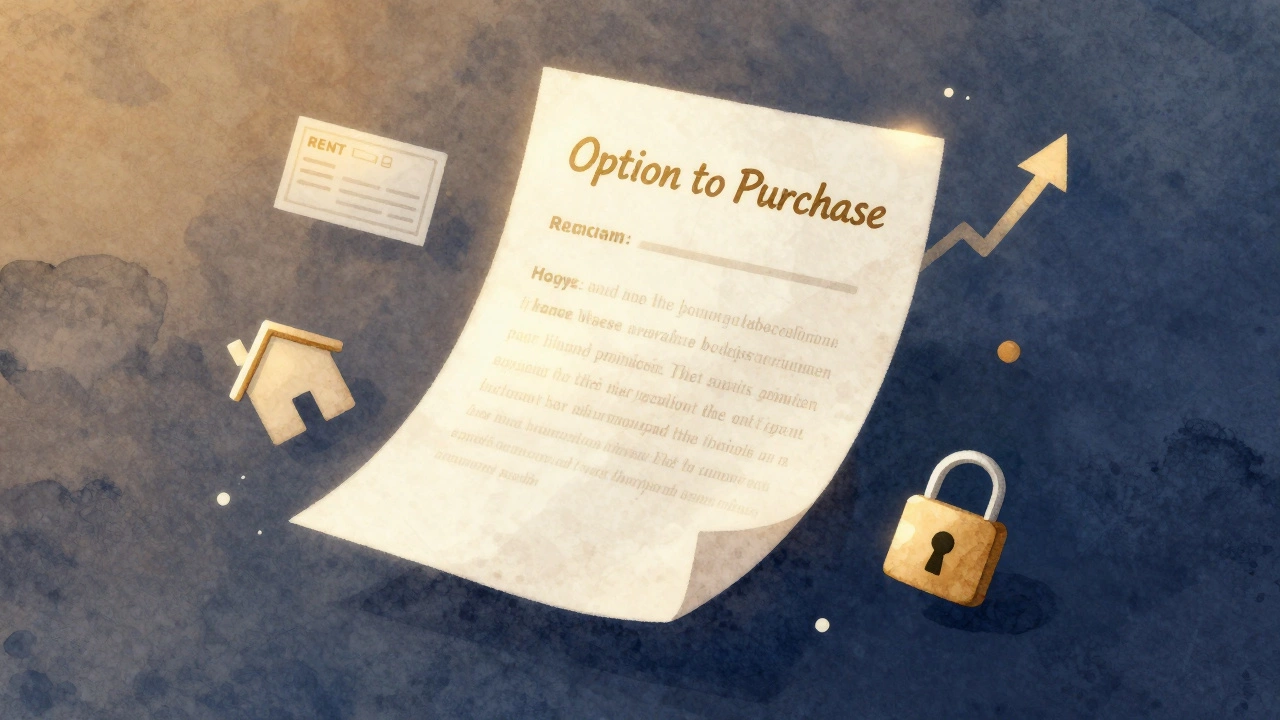
Another term you’ll run into is option to purchase. This isn’t the whole agreement-it’s the part that gives you the right to buy. In a lease-to-own contract, the "option to purchase" is a separate clause that locks in your ability to buy the home by a certain date. You usually pay an upfront fee for this option, called an "option fee" or "option money." That fee is non-refundable if you decide not to buy, but it often gets applied to the purchase price if you do.
For example, if you pay $5,000 as an option fee and later buy the house for $300,000, that $5,000 comes off the total. In some cases, the seller will even credit part of your monthly rent toward the purchase price-say $300 of your $1,800 rent goes toward equity. That’s what makes these deals attractive to people who need time to fix their credit or save more money.
Land Contract: A Different Legal Path
Not all rent-to-own deals are the same. In some states, especially in the Midwest and South, you might hear the term land contract. This is a bit different. With a land contract, you’re not just renting-you’re making payments directly to the seller as if you already own the home. The seller keeps the title until the full amount is paid. Once you pay it off, they transfer the deed to you.
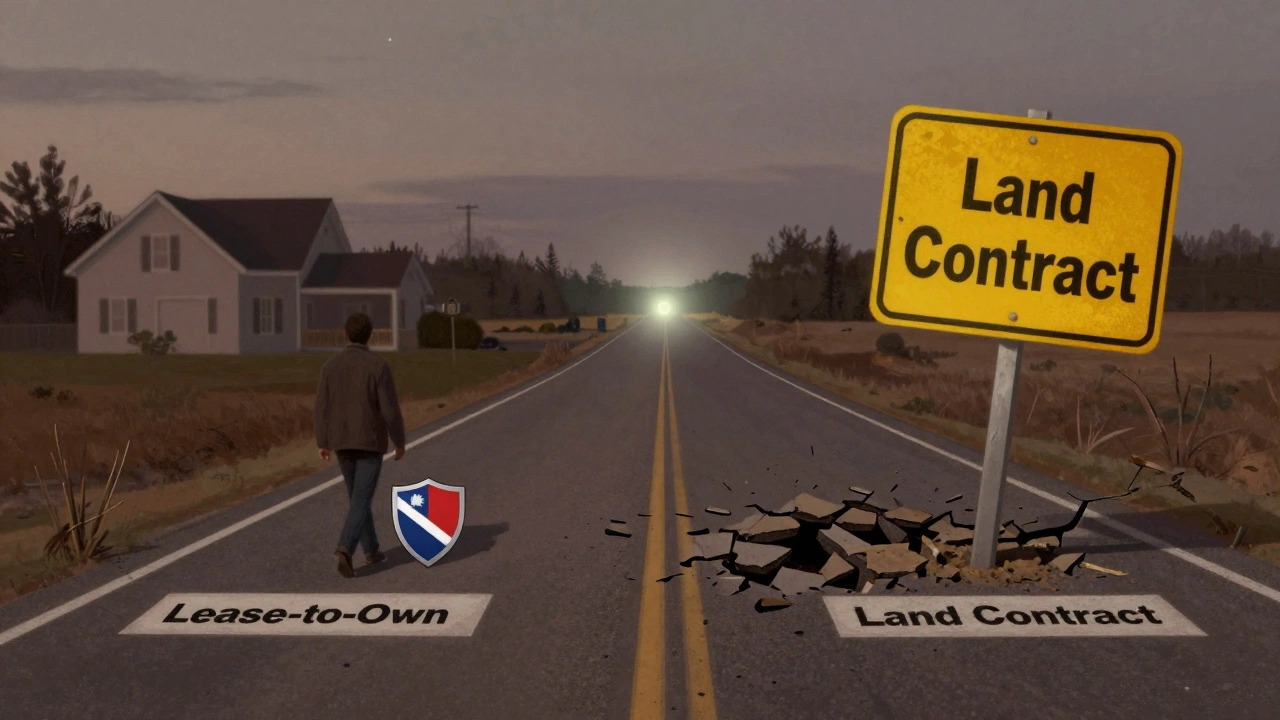
Land contracts are more common when the seller is motivated to sell quickly and doesn’t want to go through a traditional mortgage process. But they come with higher risk: if you miss a payment, the seller can cancel the contract and keep all the money you’ve paid, even if you’ve paid for five years. There’s no foreclosure process like with a bank loan. That’s why it’s critical to have a lawyer review any land contract before signing.
Home Ownership Agreement: The Broad Term
You might also come across the phrase home ownership agreement. This is more of a catch-all term used by counselors and nonprofit housing agencies. It doesn’t specify the exact structure-it could be lease-to-own, land contract, or even a shared equity model. But it’s often used in government-backed programs like those run by HUD or local housing authorities to help first-time buyers who don’t qualify for traditional loans.
In Los Angeles, for instance, some city-funded programs use the term "home ownership agreement" to describe partnerships between low-income renters and nonprofit developers. These programs often include free financial coaching, credit repair help, and down payment assistance. So if you’re hearing "home ownership agreement," it might mean you’re getting more support than just a standard lease-to-own deal.
Why the Different Names Matter
The names aren’t just for show-they reflect legal differences that affect your rights and risks. A lease-to-own contract is typically governed by landlord-tenant laws, while a land contract falls under real estate sales law. That means if the seller defaults on their mortgage and the bank forecloses, your rights under a lease-to-own might be stronger than under a land contract.
Here’s a quick breakdown:
| Term | Legal Basis | Who Holds Title? | Down Payment? | Refundable Fees? |
|---|---|---|---|---|
| Lease-to-own | Landlord-Tenant Law | Seller | Option fee (non-refundable) | Usually not |
| Land contract | Real Estate Sales Law | Seller (until paid in full) | Payments go toward full price | No |
| Option to purchase | Contract Law | Seller | Separate option fee | Only if you buy |
If you’re considering one of these deals, always ask: "Is this a lease with an option to buy, or am I already paying for ownership?" The answer changes everything.
Pitfalls to Avoid
These arrangements sound like a shortcut to homeownership, but they’re full of traps. Here’s what goes wrong most often:
- You pay rent credits, but the seller never puts them into escrow-so they disappear if they sell the house.
- The purchase price is set too high, making it impossible to qualify for a mortgage later.
- The contract doesn’t say what happens if you can’t buy at the end-you lose everything.
- The seller has a mortgage, and if they default, you could be evicted even if you paid for years.
Always get a title search done. Check if the seller actually owns the property and if there are liens on it. Ask for a copy of their mortgage statement. If they won’t show it, walk away.
Who Should Consider This?
Rent-to-own isn’t for everyone. It works best if:
- You need 12-24 months to improve your credit score (from 580 to 640+)
- You can save $5,000-$10,000 for an option fee and closing costs
- You’re confident you’ll qualify for a mortgage by the end of the term
- You’ve had a lawyer review the contract
If you’re looking for a quick fix or you’re unsure about your job stability, skip it. These deals are designed for people who are close to owning a home-not those who are far from it.
Is rent-to-own the same as lease-to-own?
Yes, rent-to-own and lease-to-own are used interchangeably in most cases. Both refer to a rental agreement that includes an option to buy the property at a later date. The term "lease-to-own" is more common in legal documents and real estate listings because it sounds more formal and emphasizes the binding nature of the lease contract.
Do I get my rent money back if I don’t buy the house?
Usually not. Most rent-to-own agreements include a non-refundable option fee and sometimes rent credits that only count toward the purchase price. If you decide not to buy, you lose those payments. However, if the contract specifies that a portion of your monthly rent is credited toward the down payment, that amount should be applied if you buy-but not refunded if you walk away.
Can I negotiate the purchase price in a rent-to-own deal?
Yes, and you should. The purchase price is locked in at the start of the agreement, so it’s critical to make sure it’s fair. Ask for a recent appraisal or compare the price to similar homes in the area. If the price is too high, you won’t be able to get financing later. Never agree to a price without checking current market values.
What’s the difference between a land contract and rent-to-own?
In a land contract, you’re essentially paying for the home over time, and the seller keeps the title until you pay in full. In a rent-to-own deal, you’re renting first, and you have the option-but not the obligation-to buy later. Land contracts carry more risk because if you miss a payment, you can lose everything without a foreclosure process. Rent-to-own offers more protection under tenant laws.
Are rent-to-own homes a scam?
Not all of them are, but many are poorly structured or predatory. Scams often involve inflated prices, hidden fees, or sellers who don’t own the property. Always verify the seller’s ownership with a title search, get everything in writing, and have a real estate attorney review the contract. If something feels too good to be true, it probably is.