What is the cheapest type of house to put on land?
Dec, 1 2025
House Cost Comparison Calculator
Estimate Your Total Home Costs
Calculate costs for different house types based on your specific situation
Cost Comparison
Key Differences
| Factor | Manufactured | Modular | Tiny | Stick-Built |
|---|---|---|---|---|
| Financing Options | Personal Loan | Standard Mortgage | Difficult | Standard Mortgage |
| 30-Year Interest Rate | 12% | 6.5% | 8-10% | 6.5% |
| Annual Insurance | 20-40% Higher | Standard | Variable | Standard |
| Total 30-Year Cost | $0 | $0 | $0 | $0 |
1. Site prep costs are the same for all house types ($15k-$40k) - these are fixed costs you must pay regardless of house type.
2. Manufactured homes require permanent foundations to qualify for mortgages (FHA/VA loans).
3. Tiny homes often face zoning restrictions and may not qualify as primary residences.
4. Modular homes match stick-built homes in financing and insurance rates.
Buying land is one thing. Building on it? That’s where the real costs start adding up. If you’re looking to put a house on your land without breaking the bank, you need to know which type of home actually saves you the most money - not just on the price tag, but on permits, foundation work, labor, and time.
Manufactured Homes Are Still the Lowest-Cost Option
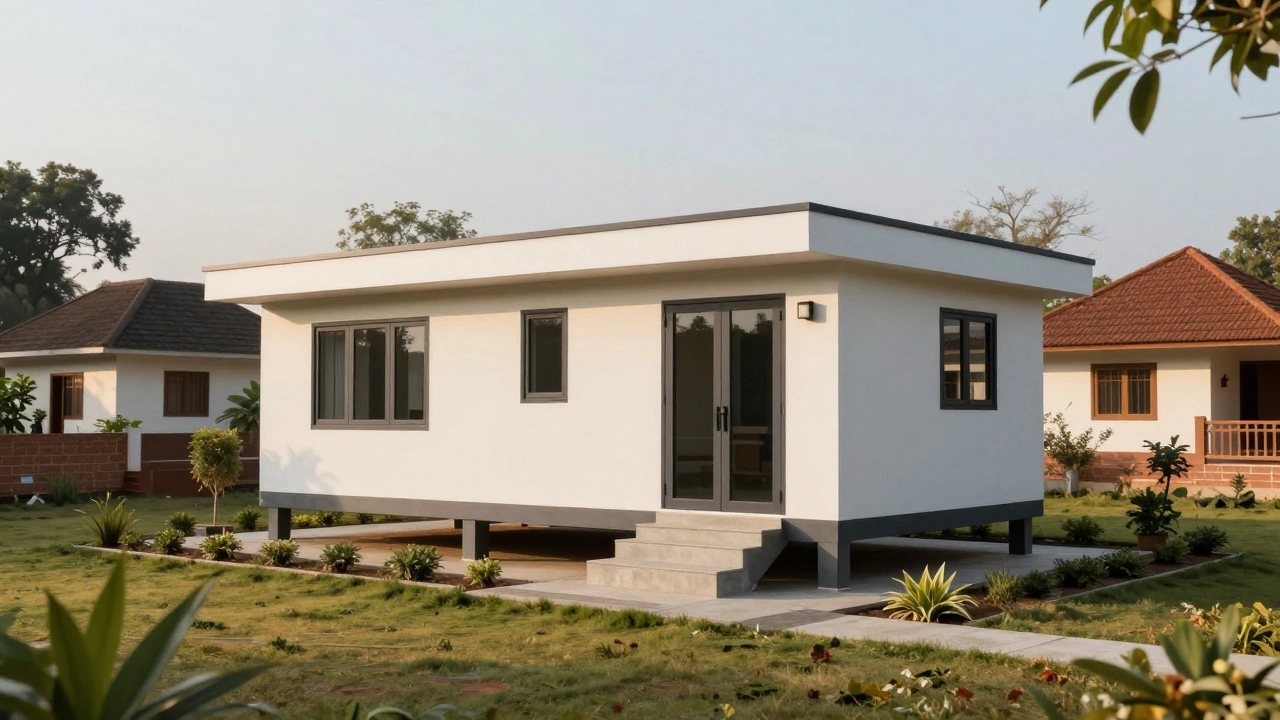
If you want the absolute cheapest house you can put on land, a manufactured home (sometimes called a mobile home) is still the winner. These homes are built in a factory under federal HUD codes, then transported and set on a foundation. In 2025, you can buy a new single-wide manufactured home for as low as $50,000, and a double-wide for under $100,000. That’s not including the cost of the land, but the house itself? That’s cheaper than most used cars.
Why so cheap? Factory production cuts labor costs by 30-50% compared to on-site building. Materials are bought in bulk, waste is minimized, and weather delays don’t happen. A typical manufactured home can be installed in under a week once it arrives on your lot. You still need to pay for site prep - grading, septic, well, utilities - but those costs are the same no matter what kind of house you build.
Don’t let the old stigma fool you. Modern manufactured homes look nothing like the trailers from the 90s. Many now have vaulted ceilings, granite countertops, hardwood floors, and even smart home features. Some models even come with attached garages and porches. They’re not just affordable - they’re livable.
Modular Homes Offer More Customization at a Slight Premium
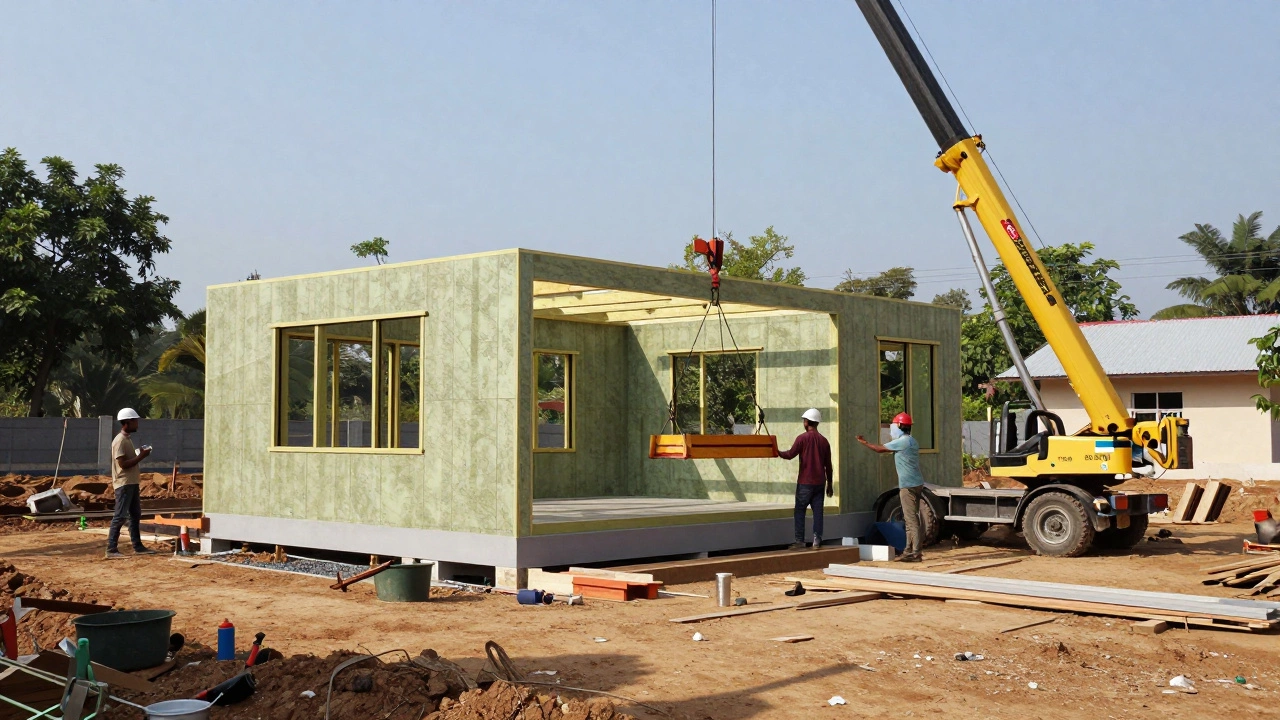
If you want something that looks like a traditional stick-built house but still wants to save money, modular homes are the next step up. These are built in sections in a factory, then shipped and assembled on-site. They follow the same building codes as site-built homes, so they’re often easier to finance and insure.
Prices for modular homes start around $80,000 for a basic 1,200-square-foot model. You’ll pay $120-$150 per square foot on average, compared to $150-$250 for a custom-built home. The big difference? You get more control over design. Want a hip roof? A finished basement? A wraparound porch? Modular builders can do it - and you’re still saving 15-25% compared to building from scratch.
Installation takes longer than a manufactured home - usually 2-4 weeks on-site - but you get better resale value. In many areas, modular homes are indistinguishable from site-built homes. Lenders don’t treat them as “mobile” units. Appraisers value them the same. That makes them a smart middle ground between cost and long-term worth.
Tiny Homes: Cheap, But Not Always Legal
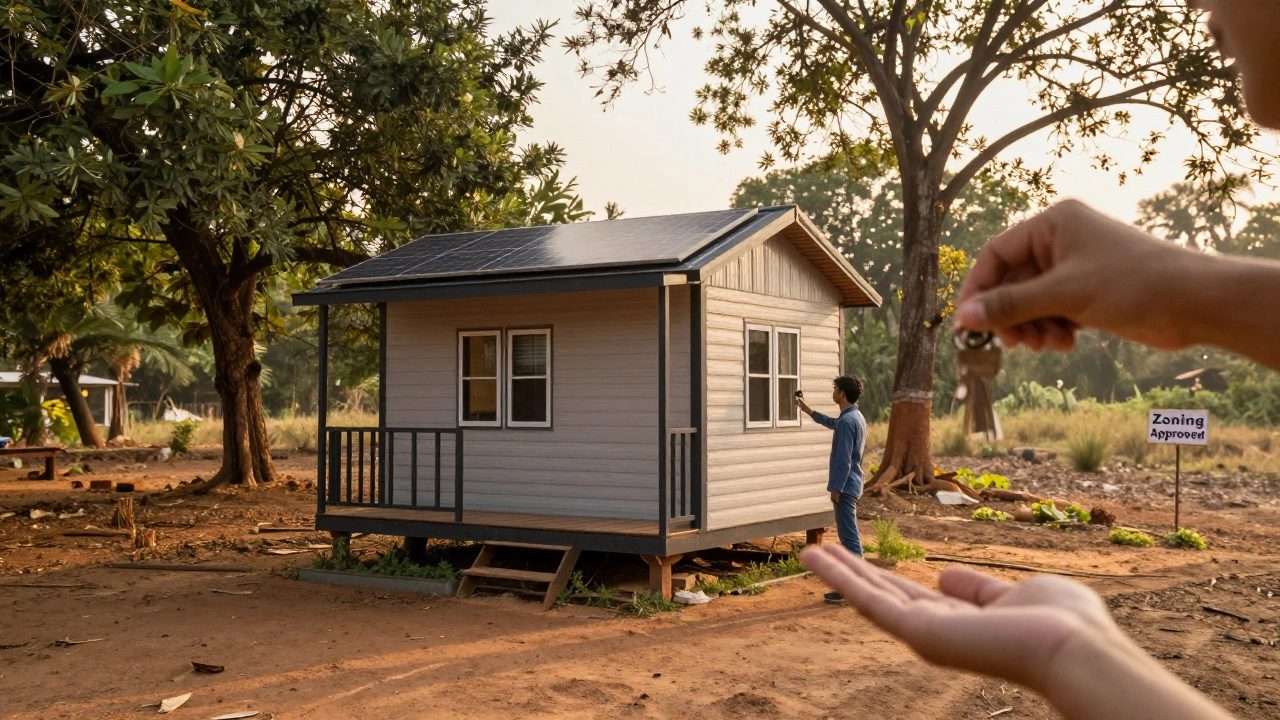
Tiny homes on wheels (THOWs) are popular on Instagram. But in real life? They’re a legal gray zone. Most counties don’t allow them as permanent residences because they’re classified as RVs, not homes. You might be able to park one on your land as a guest house, studio, or ADU - but not as your main dwelling.
If your local zoning allows it, a tiny home on a foundation (not wheels) can cost as little as $30,000-$60,000. But that’s only if you do most of the work yourself. Pre-built tiny homes from companies like Tumbleweed or Tiny Heirloom start at $75,000. And even then, you’ll need to check if your land allows a dwelling under 400 square feet. Many suburban areas have minimum square footage rules that block tiny homes entirely.
Also, financing is hard. Most banks won’t give you a mortgage for a tiny home unless it’s on a permanent foundation and meets local building codes. You’re often stuck with personal loans or cash. That’s fine if you’re wealthy. Not so great if you’re trying to save money.
Why Stick-Built Houses Cost More - Even When They Look Similar
You might think, “Why not just build a small house the normal way?” The answer is labor. Even a 800-square-foot stick-built house can cost $150,000-$200,000 in most parts of the U.S. Why? Because every nail, pipe, and wire is installed by hand, on-site, over months.
Here’s the breakdown for a 1,000-square-foot stick-built home in California in 2025:
- Permits and fees: $8,000-$15,000
- Foundation: $15,000-$25,000
- Framing and roofing: $30,000-$45,000
- Plumbing and electrical: $20,000-$30,000
- Insulation, drywall, finishes: $25,000-$40,000
- Landscaping and driveway: $10,000+
That’s $108,000 minimum - and that’s before the kitchen cabinets or bathroom fixtures. Compare that to a $90,000 modular home that includes all of that. Or a $65,000 manufactured home that’s move-in ready.
Hidden Costs You Can’t Ignore
It’s not just the house. It’s what’s under it and around it.
Every home needs:
- Septic system or sewer hook-up: $5,000-$15,000
- Well or water line: $3,000-$10,000
- Electrical service upgrade: $2,000-$8,000
- Driveway and access road: $5,000-$12,000
- Site clearing and grading: $3,000-$10,000
These costs are the same whether you build a mansion or a tiny cabin. That’s why the house type matters so much - the land prep is fixed. The house is where you cut corners.
Manufactured homes often have lower foundation requirements. Some just need concrete piers. Modular homes need full foundations, but they’re smaller than stick-built ones. Tiny homes? You might need a full foundation anyway if you want to avoid zoning violations.
Financing and Insurance: The Real Dealbreaker
Here’s the catch: not all homes are treated equally by banks.
Manufactured homes built after 1976 can be financed with FHA loans, but only if they’re on a permanent foundation. If it’s on wheels, you’re looking at a personal loan with 10-15% interest. That can eat up your savings faster than the house costs.
Modular homes qualify for standard mortgages. Same rates as stick-built. Same insurance policies. That’s huge. A $100,000 modular home on a mortgage at 6.5% for 30 years? Monthly payment around $630. A $60,000 manufactured home on a 12% personal loan? $750 a month - and you own nothing after 10 years.
Insurance is another factor. Manufactured homes often cost 20-40% more to insure than site-built homes, especially in hurricane or wildfire zones. Modular homes? Same rate as traditional houses.
What’s the Best Choice for Most People?
If your goal is to get the lowest possible cost per square foot, and you’re okay with a slightly different look and feel - go with a manufactured home. It’s the only option that gets you under $60,000 for the structure and still meets modern safety standards.
If you want to live in a home that looks like your neighbor’s, can be financed like a regular house, and will hold its value - choose modular. You’ll pay $20,000-$40,000 more than a manufactured home, but you’ll save $80,000+ compared to building stick-built.
Tiny homes? Only if your county allows them as primary residences. Otherwise, you’re just renting a fancy shed.
Stick-built? Only if you have a $250,000+ budget, a contractor lined up, and a lot of patience. Otherwise, you’re overpaying.
Bottom Line: Know Your Rules Before You Buy Land
Before you buy land, call your county planning office. Ask:
- Are manufactured homes allowed as primary residences?
- Is there a minimum square footage requirement?
- Do tiny homes on wheels count as dwellings?
- What are the setback rules?
- Are there restrictions on foundation types?
Some rural areas are wide open. Others ban manufactured homes outright. You can’t afford to assume. A $50,000 house is worthless if you can’t legally live in it.
The cheapest house to put on land isn’t always the flashiest. But it’s the one that fits the rules, fits your budget, and lets you actually live there - not just dream about it.
Can I put a manufactured home on any piece of land?
No. Many subdivisions, HOAs, and even some rural zones ban manufactured homes. Always check local zoning laws before buying land. Some areas require the home to be on a permanent foundation and meet specific size or appearance standards.
Are modular homes cheaper than stick-built homes?
Yes, typically by 15-25%. Modular homes are built in factories with controlled labor and material costs. A 1,500-square-foot modular home might cost $135,000, while a stick-built version on the same lot could cost $180,000 or more.
Do tiny homes appreciate in value?
Rarely. Tiny homes on wheels are treated like vehicles - they depreciate. Even tiny homes on foundations struggle to appreciate unless they’re in high-demand areas with relaxed zoning. Most buyers avoid them because financing and resale are difficult.
What’s the average cost to prepare land for a house?
Land prep typically costs $15,000-$40,000, depending on terrain and infrastructure needs. This includes clearing trees, grading, installing a septic system, drilling a well, running power lines, and building a driveway. These costs are the same no matter what type of house you build.
Can I finance a manufactured home with a mortgage?
Only if it’s placed on a permanent foundation and meets HUD code requirements. Otherwise, you’ll need a personal loan or cash. FHA and VA loans can cover manufactured homes on permanent foundations, but not those on wheels or temporary piers.