What Is the Most Affordable Housing? Real Options That Actually Work in 2025
Dec, 1 2025
Affordable Housing Calculator
Housing Cost Calculator
The U.S. Department of Housing and Urban Development defines affordable housing as rent not exceeding 30% of your gross monthly income. This calculator shows what's truly affordable for your situation.
Your Maximum Affordable Rent
$0
Based on the 30% affordability standard
Housing Options for You
Based on your income, these housing options may be feasible:
When you hear affordable housing, what comes to mind? Maybe a cramped apartment with peeling paint, a waiting list that never moves, or a government program that feels impossible to get into. The truth is, affordable housing isn’t just about rent prices-it’s about stability, location, and real options that fit your life. And in 2025, there are more paths to affordable living than most people realize.
What Does ‘Affordable’ Actually Mean?
The U.S. Department of Housing and Urban Development (HUD) defines affordable housing as any unit where a household pays no more than 30% of their gross income on rent and utilities. That’s the standard. But here’s the catch: in cities like Los Angeles, San Francisco, or New York, even a studio apartment can eat up 50% of a minimum wage paycheck. So when we talk about affordable housing, we’re really talking about what works for people earning under $45,000 a year-especially those working in retail, healthcare support, teaching, or service jobs.
It’s not just about cheap rent. It’s about being close to work, public transit, schools, and grocery stores. A $700 apartment 45 minutes from your job isn’t affordable if you’re spending $600 a month on gas and bus passes.
Public Housing and Section 8 Vouchers
Public housing is the oldest form of government-backed affordable housing in the U.S. Run by local housing authorities, these are apartment complexes owned by the government and rented at reduced rates. In Los Angeles, the Housing Authority of the City of Los Angeles (HACLA) manages over 20,000 units. But here’s the reality: the waiting list can be five to seven years long.
Section 8 vouchers are more flexible. Instead of living in a government building, you get a voucher that helps cover part of your rent in a private apartment. You pay 30% of your income, and the government pays the rest directly to the landlord-up to a set limit based on your area. In 2025, the voucher amount in L.A. County averages $1,800 per month for a two-bedroom. That means you can find a decent one-bedroom for $1,200 and still have room to spare.
But landlords aren’t required to accept vouchers. Many don’t. That’s why it’s crucial to know which property management companies do participate. In L.A., companies like Greystar and AvalonBay have started accepting vouchers in certain buildings. Check your local housing authority’s website for a list of participating landlords.
Tiny Homes and Accessory Dwelling Units (ADUs)
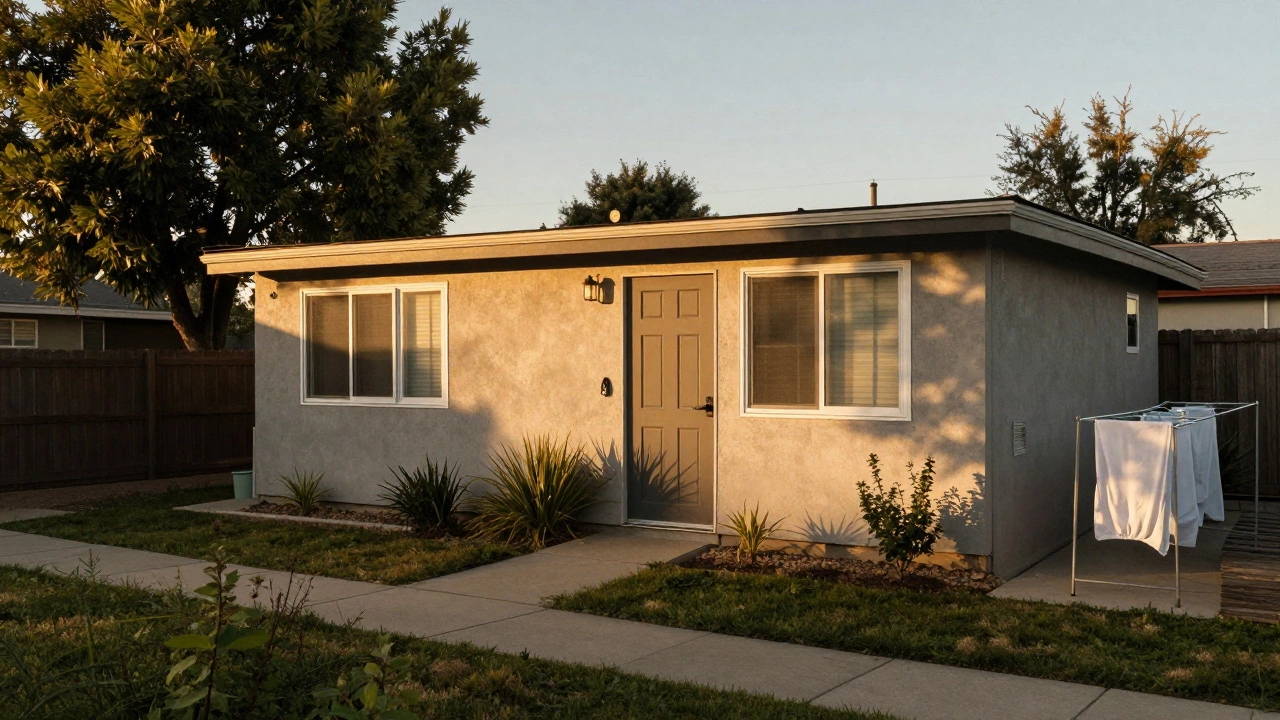
In 2025, California passed new laws making it easier to build Accessory Dwelling Units-also called granny flats or backyard cottages. These are small, self-contained homes built on the same lot as a primary residence. Cities like Los Angeles now allow ADUs up to 1,200 square feet without requiring additional parking in many zones.
What does this mean for affordability? A lot. A single-family home owner can build a 600-square-foot ADU for around $150,000-$200,000. Then they rent it out for $1,400-$1,800 a month. That’s not luxury housing-it’s real, legal, and often better than a studio in a 1970s apartment complex. Tenants get a private entrance, kitchen, bathroom, and no shared walls.
Tiny homes on wheels are another option. These are built on trailers and can be parked in RV parks or designated tiny home communities. In California, communities like the Tranquility Dunes in San Diego or Little House Community in Santa Rosa offer monthly fees of $600-$900, which includes water, trash, and basic utilities. You own your tiny home, rent the space. Monthly cost? Often under $1,500 total.
Co-Living and Shared Housing
Co-living isn’t just for millennials in tech hubs. It’s a growing solution for working parents, seniors on fixed incomes, and young adults trying to save. Companies like Common, The Collective, and local operators run shared housing spaces where you rent a private bedroom but share the kitchen, living room, and sometimes bathrooms.
In L.A., you can find co-living units starting at $900 a month-yes, that’s for a private room with a lock, Wi-Fi, utilities, and cleaning services included. Some even offer laundry, meals, and community events. It’s not for everyone, but if you’re single, don’t mind shared spaces, and want to live in a safe neighborhood with transit access, it’s one of the most cost-effective options available.

Manufactured Homes and Mobile Home Parks
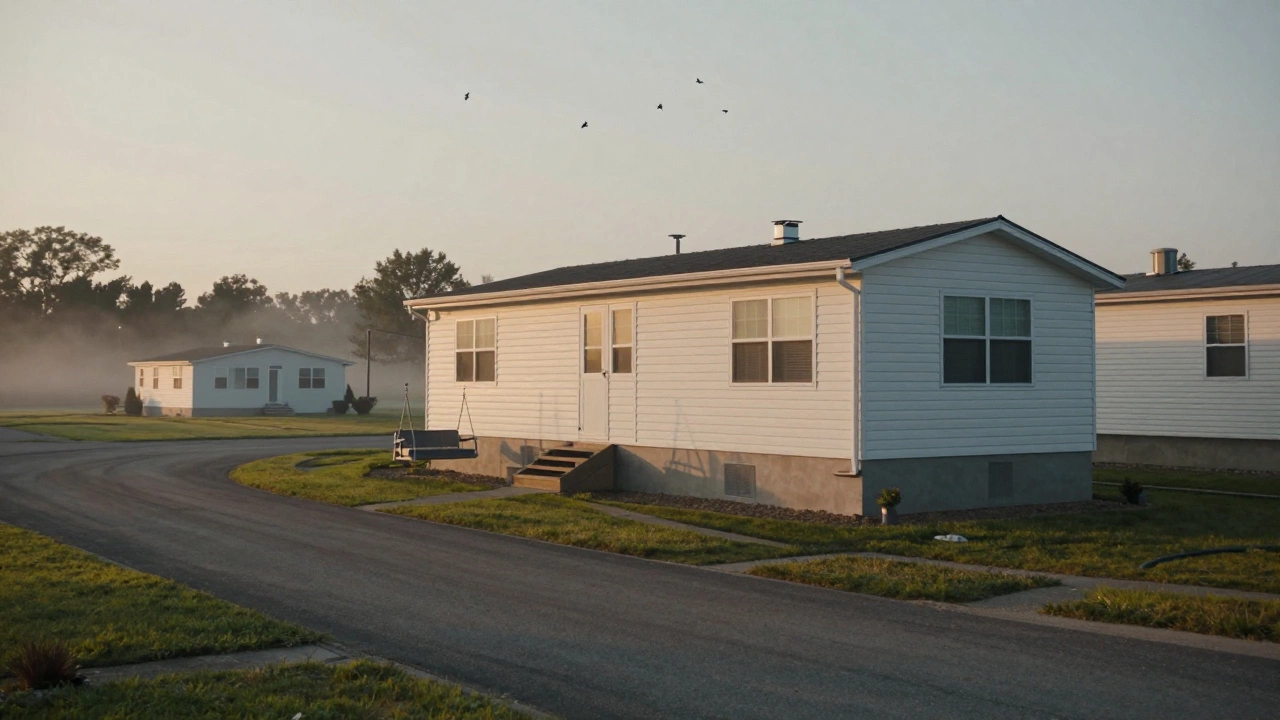
Don’t write off mobile homes. In 2025, modern manufactured homes are energy-efficient, built to strict codes, and often come with warranties. The key difference? You own the home, but rent the land it sits on in a mobile home park.
In California, monthly lot rents in well-maintained parks range from $500 to $1,000. Add your mortgage or payment for the home itself (which can be as low as $40,000 for a used, decent condition unit), and your total housing cost can be under $1,200 a month. Compare that to renting a one-bedroom apartment for $2,200.
There’s a stigma, but the reality is different. Many parks now have paved streets, community centers, playgrounds, and even on-site laundry and maintenance staff. In places like Bakersfield, Lancaster, and even parts of the San Fernando Valley, manufactured homes are the backbone of middle-income housing.
Nonprofit and Community Land Trusts
Community land trusts (CLTs) are nonprofit organizations that buy land and lease it to homeowners at below-market rates. The homeowner owns the house but not the land. This keeps the home permanently affordable-even when the surrounding neighborhood gentrifies.
In Los Angeles, the Los Angeles Community Land Trust has helped over 150 families buy homes with as little as $5,000 down. Monthly payments average $1,100-$1,400 for a three-bedroom home. That’s less than rent in many apartments.
CLTs aren’t everywhere, but they’re expanding. Check your county’s housing department for local trusts. Some operate in San Diego, Oakland, and Sacramento too.
What Doesn’t Work
Not every ‘affordable’ option is right. Here’s what to avoid:
- Sublets from strangers on Craigslist-no lease, no protections, high risk of eviction
- Overpriced ‘micro-apartments’ marketed as affordable-they’re often 250 sq ft with no kitchen and rent for $1,800
- Living in a garage without proper permits-illegal, unsafe, and can be shut down overnight
- Assuming Section 8 is easy to get-it’s not. Apply early, and keep checking for updates
How to Find Affordable Housing Right Now
Here’s a simple checklist to start today:
- Go to your local housing authority website and sign up for Section 8 or public housing waitlists.
- Search for ADUs on Zillow or Realtor.com-filter by ‘Accessory Dwelling Unit’ or ‘granny flat’.
- Look up mobile home parks in your area-call the office, ask about lot rent and rules.
- Visit co-living websites like Common or search ‘co-living [your city]’ on Google.
- Check with local nonprofits-churches, community centers, and housing coalitions often have lists of available units.
Apply to every option you qualify for. Don’t wait for the perfect place. Affordable housing is rarely perfect-it’s just better than what you’re paying now.
Why This Matters Beyond Rent
When people have stable, affordable housing, everything changes. Kids do better in school. Parents hold jobs longer. Health costs drop because stress goes down. A 2023 study by the Urban Institute found that people in affordable housing were 40% less likely to rely on emergency rooms and 30% more likely to stay employed for over a year.
Affordable housing isn’t charity. It’s economic infrastructure. And the options exist-you just have to know where to look.
What is the cheapest place to live in California for housing?
The cheapest places to live in California are outside major metro areas. Cities like Bakersfield, Modesto, and Fresno have lower rent, but the real savings come from manufactured home parks and ADUs. In Bakersfield, you can find a 2-bedroom manufactured home with lot rent at $700/month. In Fresno, Section 8 vouchers stretch further, and co-living spaces start around $850. Location matters more than the city name-look for areas with good transit access and lower property taxes.
Can I get affordable housing if I have bad credit?
Yes. Many affordable housing programs don’t check credit scores. Public housing and Section 8 focus on income, not credit. Landlords who accept vouchers often don’t require credit checks either. For ADUs or co-living, some owners only ask for proof of income and references. If you’re applying for a manufactured home, the lender might check credit-but you can often find sellers who offer owner financing with no credit check.
How long is the wait for Section 8 in Los Angeles?
As of 2025, the waitlist for Section 8 in Los Angeles is closed. The Housing Authority of the City of Los Angeles (HACLA) hasn’t opened the list since 2021 and doesn’t have a set date for reopening. That doesn’t mean you can’t get help. Apply anyway-some vouchers become available through special programs for veterans, seniors, or people with disabilities. Also, check neighboring counties like Long Beach or Pasadena-they sometimes have shorter waitlists.
Are tiny homes legal in California?
Yes, but it depends on where you put them. California law allows tiny homes on wheels (THOWs) in RV parks and designated tiny home communities. You can also build them as Accessory Dwelling Units (ADUs) on your own property or someone else’s. However, placing a tiny home on private land without a permit is illegal in most cities. Always check zoning laws before buying or moving one. Cities like Sacramento and San Diego have clearer rules than L.A. or San Francisco.
Can I buy a home with low income?
Yes, if you use the right programs. FHA loans require as little as 3.5% down. In California, the CalHFA program offers down payment assistance up to 5% of the home price. Community Land Trusts let you buy a home with $5,000 down and keep payments under $1,400/month. You don’t need a high income-you need to know where to look. Start with a housing counselor from a HUD-approved agency. They’ll help you find programs you qualify for.
Next Steps
If you’re struggling with rent right now, don’t wait. Start with one step today: visit your local housing authority website. Even if the waitlist is closed, sign up anyway. Put in your name. Then search for ADUs or mobile home parks in your area. Call one property manager. Ask about availability. You don’t need to have it all figured out-you just need to start.
Affordable housing isn’t a fantasy. It’s a system-with gaps, yes, but also real doors you can walk through. You just have to know where they are.