Non-Resident Status Explained: How It Affects Your Property Registration

Apr, 21 2026
Residency & Property Status Estimator
Physical Presence
Center of Vital Interests
Select the factors that are primarily located in the target country:
Enter your details to see your estimated status
Quick Summary: What You Need to Know
- Residency is usually based on the "183-day rule," but not always.
- Non-resident status can trigger different tax brackets and property registration requirements.
- Your "center of vital interests" (family, job, primary home) often overrides the day-count.
- Foreign ownership laws can restrict what types of property non-residents can buy.
The Day-Count Myth and the 183-Day Rule
Most people start by counting days on a calendar. In many jurisdictions, Tax Residency is the status of a person who is liable to pay tax on their worldwide income in a specific country. The gold standard for this is the 183-day rule. If you spend more than half a year in a country, the government generally considers you a resident. But don't let that number fool you into a false sense of security.
Suppose you spend 180 days in Spain and 185 days in the US. You might think you're a non-resident of Spain. However, if your only home, your spouse, and your children are in Spain, the authorities may argue that your "habitual abode" is there. They aren't just looking at a timestamp; they're looking at where your socks are kept and where you go to sleep most nights. This is where things get messy for property owners, as your status changes how you register your home and what fees you pay.
Where Your "Vital Interests" Actually Lie
If the day-count is a tie or falls into a gray area, tax authorities look at your "center of vital interests." This isn't a fancy term for your hobbies; it's a legal assessment of your social and economic ties. To determine if you are a non-resident, an auditor will ask: Where is your primary job? Where is your primary bank account? Where do your kids go to school?
For example, if you are a digital nomad working from a laptop in Mexico but maintaining a mortgage and a voting registration in Canada, Canada may still view you as a resident. In the world of Property Registration, being labeled a non-resident can mean you have to provide additional documentation, such as a Certificate of Residency from your home country, just to prove where you actually live. This document is a formal statement from a government agency confirming your tax status, and without it, your property transfer could be stalled for weeks.
How Non-Resident Status Impacts Property Ownership
Being a non-resident isn't just a tax headache; it fundamentally changes how you interact with the land registry. In many countries, there is a massive difference between "National" and "Foreign" ownership. Some regions forbid non-residents from owning agricultural land, while others require you to buy through a specific legal structure, like a trust or a local corporation.
When you register property as a non-resident, you often encounter a "withholding tax" on the purchase or sale. While a resident might get a tax break or a deduction for their primary home, a non-resident is often treated as a purely commercial entity. This means the government takes a slice of the transaction upfront to ensure you don't disappear back across the border without paying your capital gains tax.
| Attribute | Resident | Non-Resident |
|---|---|---|
| Tax Rate on Sale | Often lower/exempt for primary home | Standard or Higher Capital Gains |
| Required Docs | Local ID / Social Security | Passport / Foreign Tax ID / Residency Cert |
| Land Restrictions | Full access to all zones | May be limited to urban/residential zones |
| Registration Speed | Standard processing | Slower (due to foreign document verification) |

The Trap of Dual Residency
The scariest place to be is "dual resident." This happens when two different countries both claim you as a resident based on their own rules. For instance, you might satisfy the 183-day rule in the UK but still be considered a US resident because of your citizenship. This creates a conflict in Property Registration and tax filings.
To solve this, countries use Double Taxation Agreements (DTAs). These are treaties that act as a "tie-breaker." If both countries want a piece of your income or your property tax, the DTA provides a hierarchy of rules to decide who wins. Usually, the decision falls to the place where you have a "permanent home available." If you have homes in both, it falls back to where your personal and economic relations are closer. If you're navigating this, you'll need a specialized accountant-not just a general one-who understands the specific treaty between those two nations.
Practical Steps to Prove Your Non-Resident Status
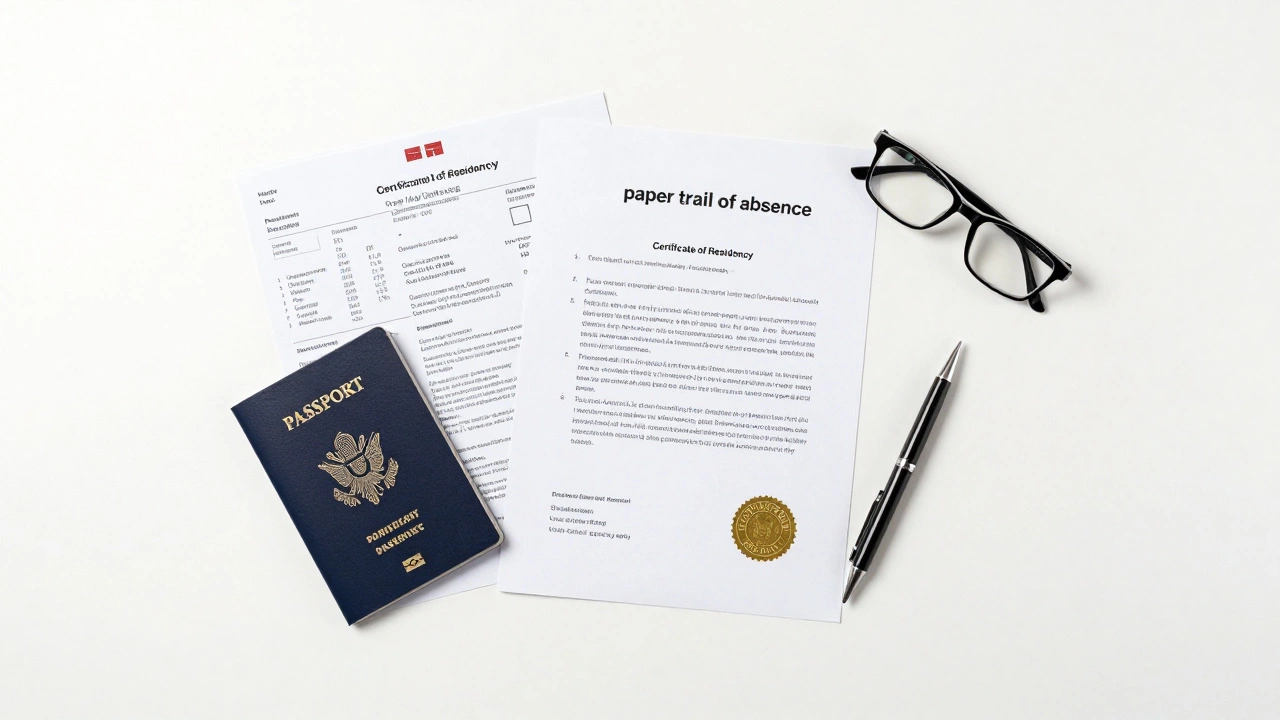
If you're trying to register a property and the local government is insisting you're a resident (perhaps to charge you higher local taxes), you need to build a "paper trail of absence." It's not enough to say you don't live there; you have to prove you live elsewhere.
- Gather Travel Logs: Keep a detailed record of flights, hotel stays, and passport stamps. This proves you spent fewer than 183 days in the country.
- Secure a Tax Certificate: Get an official document from your current country's tax authority stating you are a tax resident there.
- Utility Bills: Show that your primary electricity and water bills are being paid in another country.
- Employment Contracts: Provide a contract that shows your primary place of work is outside the jurisdiction of the property you're registering.
Be careful with "ghost homes." If you keep a fully furnished house and a car in a country but claim to be a non-resident, the authorities may view that home as a "permanent establishment." This can trigger a residency status regardless of how many days you spent there, simply because you have the *capacity* to live there permanently.
Common Pitfalls in Foreign Property Registration
Many buyers make the mistake of thinking that owning a property automatically makes them a resident. It doesn't. However, owning a property often makes you a "taxable person" in that country, even if you are a non-resident. You will still owe property taxes and potentially income tax on any rent you collect.
Another mistake is ignoring the "deemed residency" rules. Some countries have rules where if you spend a certain amount of time there over a rolling three-year period, you are suddenly flipped to resident status. This can lead to a massive, unexpected tax bill for the previous two years. Always check if the country uses a "look-back" period for residency calculations.
Does owning a house in a country automatically make me a resident?
No, owning property does not automatically grant you residency status. However, it does make you a property owner subject to local land taxes. Residency is typically determined by your physical presence (the 183-day rule) and your center of vital interests (family, work, and primary home).
What is the 183-day rule?
The 183-day rule is a common benchmark used by tax authorities worldwide. If you spend more than 183 days in a country during a calendar or fiscal year, you are generally presumed to be a tax resident of that country, meaning you may be liable for taxes on your global income.
How do I prove I am a non-resident for property registration?
You can prove non-resident status by providing a Tax Residency Certificate from your home country, passport stamps showing your travel history, and utility bills or employment contracts that demonstrate your primary life and work are based elsewhere.
What are Double Taxation Agreements (DTAs)?
DTAs are treaties between two countries designed to prevent the same income or asset from being taxed twice. They provide "tie-breaker" rules to determine which country has the primary right to tax an individual who is considered a resident of both nations.
Can non-residents buy any type of property?
It depends on the country. Some nations allow non-residents to buy residential property but ban them from owning agricultural land or strategic border properties. Always check the local foreign ownership laws before purchasing.
Next Steps for Property Buyers
If you're currently in the process of buying or registering property, your first step should be to determine your current tax status in both your home country and the country where the property is located. Don't guess; get a written opinion from a tax professional. If you're a non-resident, start gathering your documentation now-especially that Tax Residency Certificate-because government agencies are rarely fast when it comes to verifying foreign papers.
For those who are unsure, keep a meticulous log of your travel. Use an app or a simple spreadsheet to track every single day you spend in each jurisdiction. If you are audited, a precise log is much more convincing than a vague memory of "spending a few months there." Once your status is confirmed, ensure your property registration reflects this correctly to avoid overpaying on taxes or facing legal penalties down the road.