What is a Modern Villa? Design Trends and Key Features
Apr, 28 2026
Modern Villa Feature Comparison Tool
Compare Design Elements
Select a feature to see how the modern approach evolves from the traditionalIf you're looking at villas for sale, you'll notice a shift. The 'modern' label isn't just about the year it was built. It's a philosophy. It means the home is designed to fit how we actually live in 2026-working from home, prioritizing wellness, and wanting a home that manages itself. Whether it's a beachfront retreat in Bali or a hillside estate in the Hollywood Hills, the core goal is the same: creating a sanctuary that feels breathable and effortless.
The Core DNA of Modern Architecture
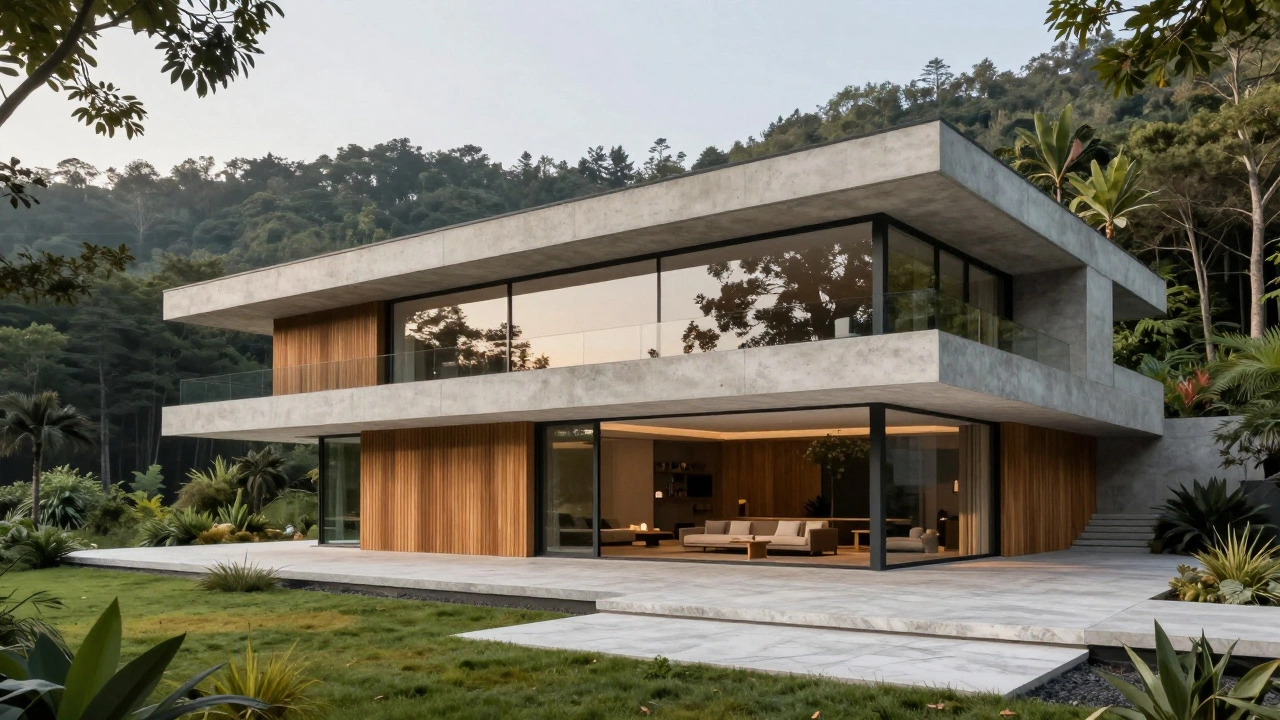
When you step into a modern villa, the first thing you'll notice is that the walls seem to disappear. This is the 'inside-out' approach. Architects use massive floor-to-ceiling glass panels to blur the line between the living room and the garden. Why? Because sunlight is the ultimate luxury. Instead of small windows, we have entire walls of glass that slide away into pockets, turning your lounge into a giant covered terrace.
The shapes are also different. You won't see many ornate columns or peaked roofs. Instead, you'll find flat roofs, cantilevered upper floors that hang over the patio without visible support, and clean, geometric lines. This minimalism isn't about making a house feel empty; it's about removing the visual clutter so the architecture and the view can take center stage.
Materials have evolved too. While traditional villas relied on brick and mortar, modern ones embrace a mix of industrial and organic. You'll see raw exposed concrete paired with warm teak wood or natural stone like Travertine. This contrast keeps the home from feeling like a cold office building and makes it feel like a curated piece of art.
Layouts That Breathe: The Open Concept
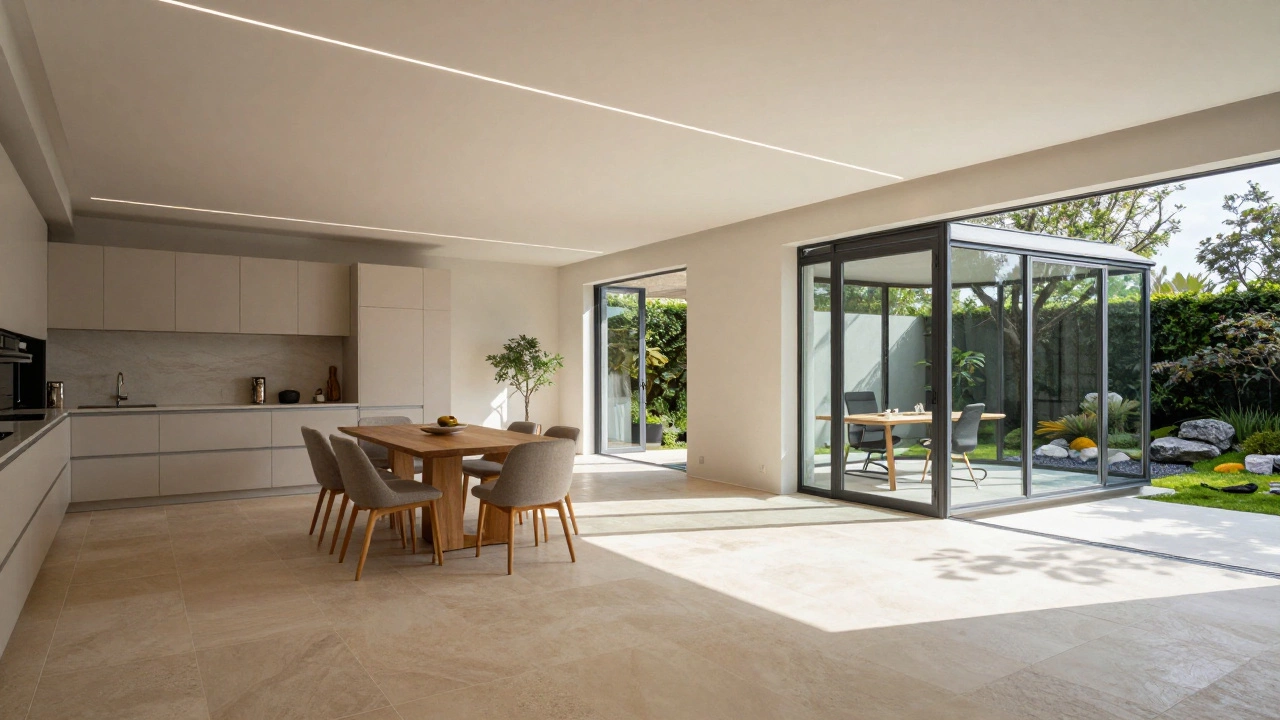
Old-school luxury was about having a room for everything: a formal dining room you only used on Christmas, a separate library, a dedicated parlor. Modern villas throw that rulebook away. The open concept floor plan is the gold standard here. The kitchen, dining area, and living room flow into one another as a single 'great room'.
This layout changes how we interact. The person cooking dinner is still part of the conversation with guests in the living area. To keep things organized, architects use 'invisible' boundaries-like a change in flooring material or a slightly dropped ceiling-instead of walls. It makes a 4,000-square-foot home feel like 8,000 square feet because your eyes can see from one end to the other without interruption.
We're also seeing the rise of 'flexible zones'. Since the pandemic, the home office isn't just a desk in a bedroom; it's a dedicated, soundproofed wing or a detached glass pod in the garden. This separation of 'work' and 'rest' is a huge part of modern luxury planning.
Smart Integration and Invisible Tech
A modern villa isn't just a pretty shell; it's a machine for living. We've moved past just having a smart speaker. Today, Home Automation is baked into the walls. We're talking about 'invisible tech' where the electronics are hidden, but the control is everywhere.
Think about automated circadian lighting that mimics the sun's movement to help you sleep better, or HVAC systems that use AI to sense which room is occupied and adjust the temperature accordingly. You might have a voice-activated system that closes the motorized blackout curtains and starts the outdoor fire pit the moment you say 'movie night'.
| Feature | Traditional Villa | Modern Villa |
|---|---|---|
| Architecture | Symmetrical, ornate, peaked roofs | Asymmetrical, geometric, flat roofs |
| Windows | Smaller, framed, decorative shutters | Floor-to-ceiling glass, sliding walls |
| Floor Plan | Segmented rooms, formal corridors | Open concept, multipurpose zones |
| Tech | Standard switches, manual controls | AI-driven automation, invisible sensors |
| Materials | Brick, plaster, ornate wood | Glass, steel, raw concrete, sustainable composites |
Sustainability as the New Status Symbol
There was a time when 'luxury' meant wasting energy-massive houses with the AC blasting 24/7. Now, the ultimate flex is sustainable architecture. A modern villa that is carbon-neutral is far more prestigious than one that isn't. This is where biophilic design comes in-the practice of incorporating nature directly into the building.
You'll see living walls (vertical gardens) that purify the air and provide natural cooling. Solar panels aren't just tacked onto the roof; they're integrated into the glass or the paving stones of the driveway. Rainwater harvesting systems are hidden underground, feeding a lush, drought-resistant landscape that uses native plants instead of thirsty grass lawns.
Energy efficiency is also achieved through 'passive design'. This means orienting the house to catch the breeze and using thermal mass (like thick concrete walls) to keep the interior cool in the summer and warm in the winter without relying entirely on the power grid. It's smart, it's ethical, and it actually lowers the cost of running a massive estate.
Outdoor Living and the 'Resort' Experience
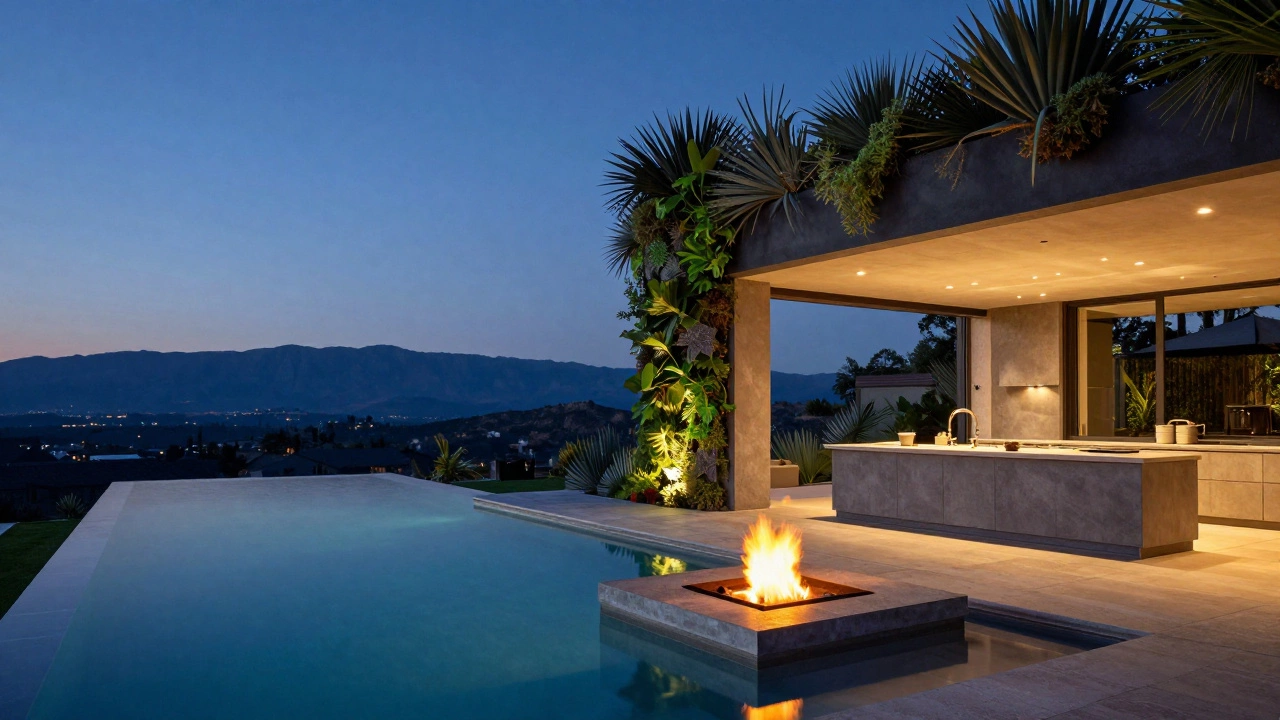
The backyard is no longer just a place for a lawn and a grill. In a modern villa, the outdoors is treated as an extension of the interior. We're talking about 'outdoor rooms'. A sunken fire pit area, an outdoor kitchen with a pizza oven and professional-grade grill, and a poolside lounge that feels like a 5-star hotel.
The pool itself has evolved. The classic kidney-shaped pool is out; infinity pools are in. By creating a visual effect where the water seems to merge with the horizon or the ocean, the pool becomes a focal point of the entire architectural composition. Some modern villas even include 'wellness wings' featuring a sauna, a steam room, and a cold plunge pool, bringing the spa experience home.
Landscaping is now about creating an ecosystem. Instead of manicured hedges, modern designers use Zen gardens, reflection ponds, and strategic lighting to create a mood. The goal is to make the transition from the living room to the pool deck so seamless that you don't even notice you've stepped outside.
Common Pitfalls When Buying a Modern Villa
While these homes look stunning in brochures, there are a few things that can go wrong if you're not careful. First, the 'glass house' problem: privacy. When your walls are transparent, you're basically living in a fishbowl. Check for smart-glass technology (which frosts over at the touch of a button) or strategic landscaping that blocks the view from the street without blocking your view of the mountains.
Second, consider the maintenance. Raw concrete can develop hairline cracks, and massive glass panes are expensive to replace. If the home relies heavily on complex automation, ask if the systems are 'open source' or proprietary. You don't want to be locked into a system where you need a specialist technician just to change the light bulbs in 2030.
Lastly, look at the acoustics. Hard surfaces like concrete, glass, and polished stone reflect sound. Without the right acoustic treatments-like recessed ceiling baffles or strategic fabric elements-a modern villa can sound like a subway station. Listen for the echo when you tour the property.
Does a modern villa have to be minimalist?
Not necessarily. While minimalism is a huge trend, 'modern' really refers to the use of current technology, materials, and design principles. You can have a modern villa with rich colors, bold art, and eclectic furniture, as long as the architectural bones follow contemporary standards like open layouts and indoor-outdoor integration.
Are modern villas more expensive to maintain than traditional ones?
It depends. Energy costs are often lower due to sustainable design and smart tech. However, specialized materials like large-scale glass and architectural concrete may require specific cleaning products and professional repairs that cost more than a simple coat of paint on a traditional wall.
What is the difference between a modern and a contemporary villa?
In architectural terms, 'modern' usually refers to the Modernist movement (think mid-century, clean lines, function over form). 'Contemporary' refers to what is happening right now. In real estate, however, the terms are often used interchangeably to describe any home with a fresh, current look and high-tech features.
How do modern villas handle privacy with so much glass?
Architects use several tricks: 'smart glass' that switches from clear to opaque, strategically placed greenery/hedges, and 'courtyard' designs where the house wraps around a private central garden, allowing for huge windows that face inward rather than toward the street.
Can you build a modern villa on a small lot?
Yes. In fact, modern design is great for small lots because it emphasizes verticality and multi-functional spaces. Using cantilevered floors and rooftop terraces allows you to maximize your square footage without needing a massive plot of land.