How Many Football Fields in an Acre? Visualizing Land Size
Jul, 3 2026
Land Size Visualizer
Quick Stats
Visual Representation
Each green block represents one standard field. Yellow indicates partial field coverage.
Common Land Sizes Reference
| Land Size | Sq Ft | Football Fields | Soccer Fields |
|---|---|---|---|
| 1 Acre | 43,560 | 0.81 | 0.64 |
| 5 Acres | 217,800 | 4.05 | 3.18 |
| 10 Acres | 435,600 | 8.10 | 6.36 |
| 40 Acres | 1,742,400 | 32.40 | 25.44 |
You see a listing for "2 acres" and picture a massive estate. Or maybe you're looking at a backyard that feels huge, but the deed says it's only half an acre. The problem with buying or selling land is that numbers on paper don't always match what your eyes tell you. An acre is a unit of area, not length or width, which makes it tricky to visualize without a reference point.
That’s why people ask: how many football fields fit into one acre? It’s the go-to mental shortcut for understanding property size. If you’re shopping for rural lots, planning a farm, or just trying to figure out if that parcel is big enough for a house and a pool, this visual comparison saves you from costly misunderstandings.
The Short Answer: One Acre vs. One Football Field
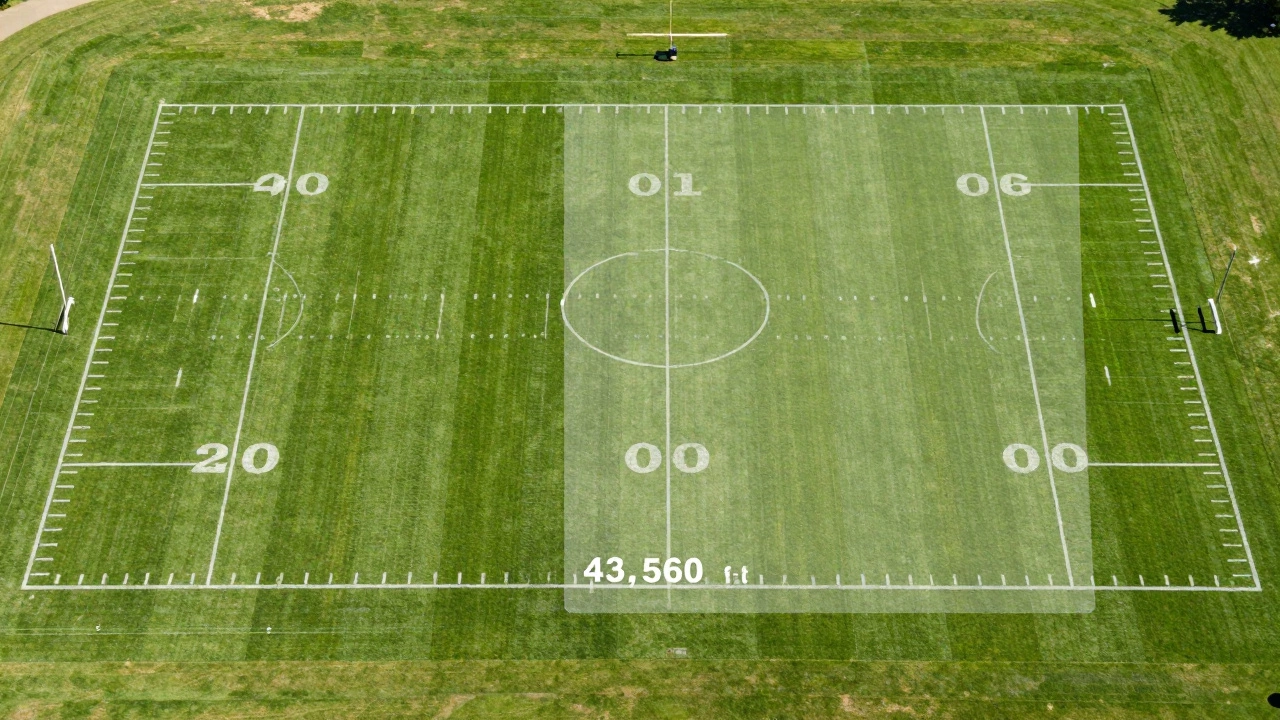
If we are talking about an American football field-including the end zones-it takes up exactly 53,500 square feet. One acre equals 43,560 square feet. So, mathematically, one acre is smaller than a full football field.
To be precise, one acre is equal to approximately 0.81 of an American football field. Conversely, one football field is about 1.23 acres.
This distinction matters because real estate agents often use "football fields" as a shorthand for large plots, but they rarely specify whether they mean the playing surface only or the entire field with sidelines and end zones. When you hear "this lot is bigger than a football field," you need to know exactly which version they are measuring against.
Breaking Down the Dimensions
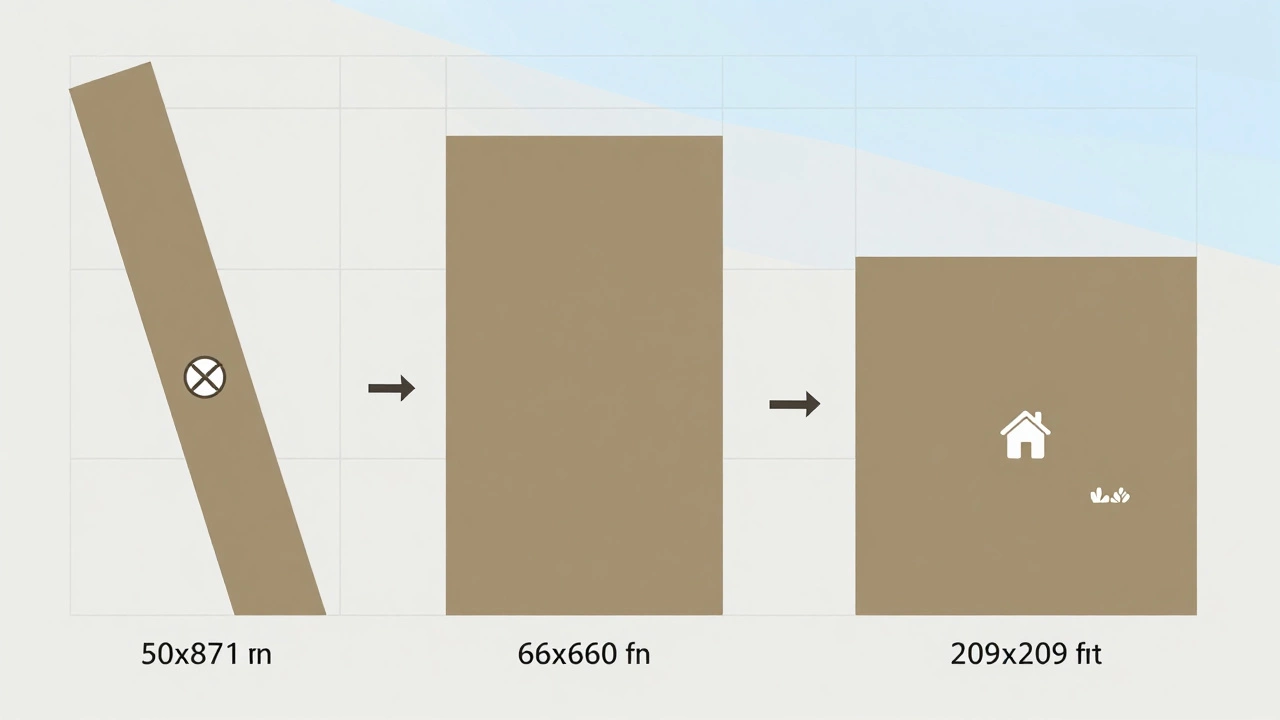
Area is two-dimensional. You can have an acre that is 66 feet wide and 660 feet long (a classic chain-based definition), or you can have an acre that is a perfect square with sides of roughly 209 feet. The shape changes how the land feels, even if the total area stays the same.
| Field Type | Dimensions (Feet) | Total Area (Sq Ft) | Acres Equivalent |
|---|---|---|---|
| American Football (w/ End Zones) | 360 x 160 | 57,600 | 1.32 acres |
| American Football (Playing Surface Only) | 300 x 160 | 48,000 | 1.10 acres |
| Soccer Field (FIFA Standard) | 360 x 190 (avg) | 68,400 | 1.57 acres |
| One Acre | 209 x 209 (square) | 43,560 | 1.00 acre |
Notice the difference between the playing surface and the full field. The NFL field itself is 100 yards long (300 feet) plus two 10-yard end zones (20 feet total). That extra 20 feet adds significant square footage. If a seller says their lot is "the size of a football field," clarify if they mean the green grass where players run or the entire stadium footprint including the sidelines.
Why Shape Matters More Than Size
Imagine you have a plot of land that is 1 acre. Now imagine another plot that is also 1 acre. They have the exact same amount of dirt underfoot. But one is a long, narrow strip-say, 50 feet wide and 871 feet long. The other is a nice, manageable square.
The narrow strip might look like a football field from the air, but you couldn’t build a standard house on it easily. Access becomes a nightmare. You’d spend most of your time walking back and forth. In contrast, the square acre gives you depth and width, allowing for better landscaping, driveway placement, and privacy.
When evaluating land for sale, never rely solely on the acreage number. Always ask for the survey map. Look at the frontage (the width along the road) versus the depth. A 2-acre lot with 100 feet of frontage is far more valuable and usable than a 2-acre lot with only 50 feet of frontage, even though the total area is identical.
Visualizing Larger Plots
Once you grasp the single-acre concept, scaling up becomes easier. Here is how common land sizes compare to sports fields:
- 5 Acres: Roughly 4 football fields. This is a typical size for a large suburban home with room for horses or a small orchard.
- 10 Acres: About 8 football fields. Enough space for serious farming, a large family compound, or extensive recreational trails.
- 40 Acres: Approximately 32 football fields. This is a standard quarter-section in many rural areas, suitable for commercial agriculture or large-scale development.
If you are considering buying 10 acres, don't just think "ten times bigger." Think about the perimeter. As land gets larger, the boundary line grows exponentially. Fencing a 1-acre square costs significantly less per square foot than fencing a sprawling, irregular 10-acre plot because the ratio of interior space to exterior fence line changes.
Common Mistakes When Estimating Land Size
Buyers often make three critical errors when trying to visualize land:
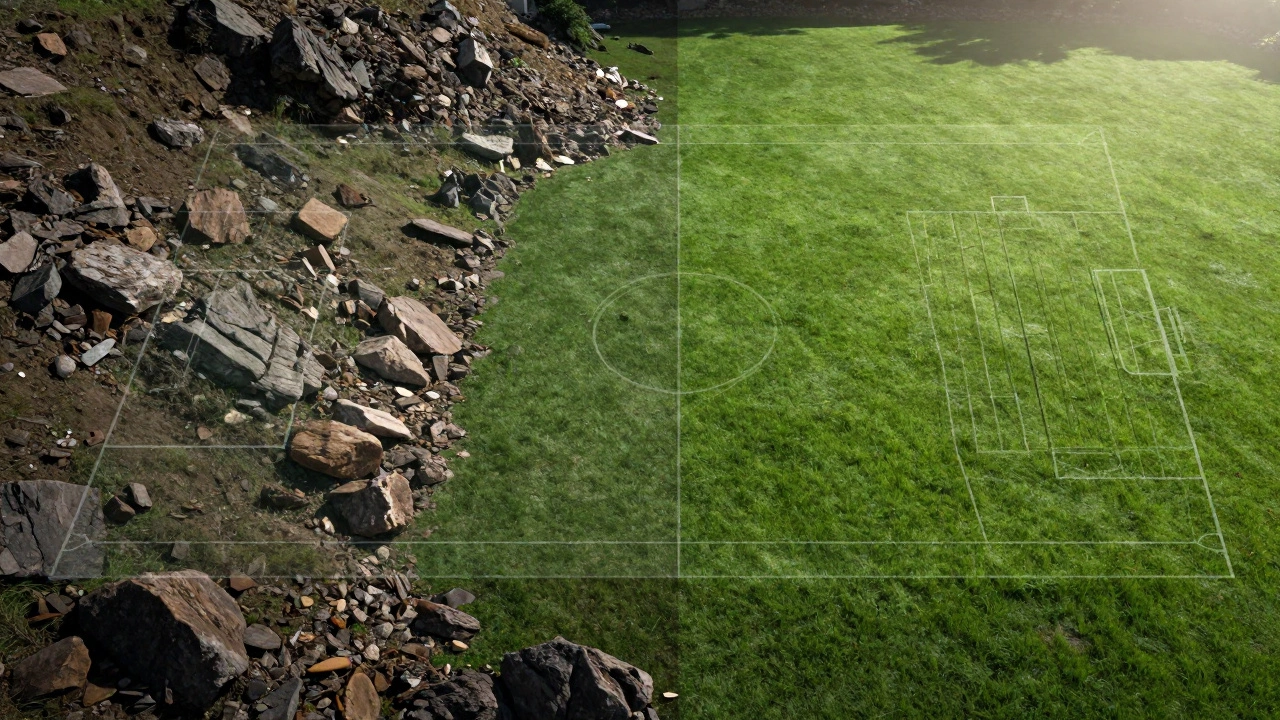
- Ignoring Topography: An acre of flat land is much more usable than an acre of steep hillside. If half your acre is a 45-degree slope, you effectively have half an acre of buildable space. Football fields are flat; most natural land is not.
- Confusing Units: In some countries, particularly those using the metric system, a "hectare" is the standard unit. One hectare equals 2.47 acres. If you are looking at international listings, mixing these up leads to massive miscalculations. A 1-hectare farm is nearly 2.5 times larger than a 1-acre lot.
- Overestimating Usable Space: Even on flat land, you lose area to setbacks. Local zoning laws require you to keep houses a certain distance from roads and neighbors. On a small acre, these setbacks can consume 20-30% of your total area, leaving you with much less room for structures than you anticipated.
Practical Tips for Land Buyers
Before you sign any contract, take these steps to ensure the land meets your needs:
- Walk the Property: Don’t just drive by. Walk the perimeter. Time how long it takes to cross from one side to the other. If it takes you five minutes to walk across, you’ll get a sense of the scale that photos can’t provide.
- Check the Zoning: An acre of residential zoned land is worth more than an acre of agricultural zoned land in most markets. Verify what you can actually build on the property.
- Use Technology: Tools like Google Earth allow you to drop pins and measure distances. While not legally binding, it helps you visualize the shape and approximate area before visiting in person.
- Hire a Surveyor: For any purchase over $50,000, a professional survey is non-negotiable. It confirms boundaries, easements, and encroachments. Old fences often do not match legal deeds.
Understanding the relationship between acres and football fields gives you a quick mental benchmark. But remember, land is unique. No two parcels are alike. Use the football field comparison as a starting point, then dig deeper into the specifics of shape, slope, and local regulations to make an informed decision.
Is an acre bigger than a football field?
No, an acre is smaller than a standard American football field including end zones. One acre is 43,560 square feet, while a full football field is 57,600 square feet. However, an acre is larger than just the playing surface (48,000 sq ft) if you exclude the end zones and sidelines, but technically still slightly smaller than the 100x53.3 yard playing area alone (53,300 sq ft).
How many soccer fields are in an acre?
A standard FIFA soccer field ranges from 100-130 yards long and 50-100 yards wide. An average professional pitch is about 1.57 acres. Therefore, one acre is roughly equivalent to 0.64 of a standard soccer field. You would need about 1.5 acres to fit one full-sized soccer pitch.
What are the dimensions of a 1-acre square?
If an acre were shaped as a perfect square, each side would be approximately 208.71 feet long. This is a useful benchmark for visualizing compact lots. However, most acres are rectangular, such as the traditional 66 feet by 660 feet configuration.
How many acres is a standard city block?
City blocks vary greatly by location. In New York City, a standard block is about 1-2 acres. In Los Angeles, blocks can be larger, ranging from 5 to 10 acres depending on the neighborhood. There is no universal standard for city block size, so you must check local municipal maps for accurate measurements.
Can I build a house on 1 acre of land?
Yes, in most residential zones, 1 acre is sufficient to build a single-family home. However, you must account for setback requirements (distance from roads and property lines), utility access, and topography. If the land is steep or has wetlands, the buildable area may be reduced significantly, making construction difficult or expensive.